Ch. 19 - Pathogenic Gram-Positive Bacteria
Bauman - Microbiology with Diseases by Taxonomy 6th Edition
Bauman6th EditionMicrobiology with Diseases by TaxonomyISBN: 9780134832302당신이 사용하는 게 아니라요?교과서 변경
19장, 문제 2

How does Staphylococcus aureus affect the matrix between cells in the human body?
a. S. aureus triggers blood clotting, which coats the matrix and inhibits cellular
communication.
b. S. aureus produces an enzyme that dissolves hyaluronic acid and thus enables it to pass between the cells.
c. S. aureus possesses a hyaluronic acid capsule that causes leukocytes to ignore the bacterium as if it were camouflaged.
d. S. aureus does not affect the matrix but instead produces a necrotizing agent that dissolves body cells.

검증된 단계별 안내
1
Understand that the extracellular matrix (ECM) between cells is composed of various substances, including hyaluronic acid, which helps maintain tissue structure and acts as a barrier to pathogens.
Recognize that some bacteria produce enzymes called hyaluronidases, which break down hyaluronic acid in the ECM, allowing the bacteria to spread through tissues more easily.
Recall that Staphylococcus aureus is known to produce such an enzyme, hyaluronidase, which degrades hyaluronic acid and facilitates bacterial movement between cells.
Evaluate the answer choices by matching this knowledge: the option describing S. aureus producing an enzyme that dissolves hyaluronic acid aligns with its mechanism to penetrate the matrix.
Conclude that the correct understanding is that S. aureus affects the matrix by producing an enzyme that breaks down hyaluronic acid, enabling it to pass between cells.

비슷한 문제에 대한 검증된 영상 답변:

이 영상 해법은 위 문제에 도움이 된다고 튜터들이 추천한 것입니다.
영상 길이:
2m
도움이 되었나요?

주요 개념

질문에 올바르게 답하기 위해 반드시 이해해야 하는 핵심 개념들은 다음과 같습니다.

Extracellular Matrix and Hyaluronic Acid

The extracellular matrix (ECM) is a network of molecules like proteins and polysaccharides, including hyaluronic acid, that provide structural support between cells. Hyaluronic acid helps maintain tissue hydration and acts as a barrier to microbial invasion. Some bacteria produce enzymes that degrade hyaluronic acid to penetrate tissues.
추천 영상:

Hyaluronidase Enzyme Produced by Staphylococcus aureus

Staphylococcus aureus secretes hyaluronidase, an enzyme that breaks down hyaluronic acid in the ECM. This degradation allows the bacteria to spread more easily between cells by disrupting the matrix, facilitating tissue invasion and infection progression.
추천 영상:
가이드 코스
03:48
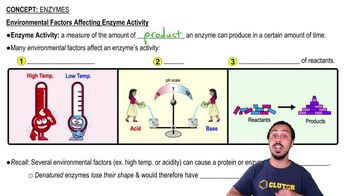
Environmental Factors Affecting Enzyme Activity

Bacterial Evasion of Host Immune Response

S. aureus can evade immune detection using mechanisms like a hyaluronic acid capsule that mimics host tissues, helping it avoid leukocyte attack. This camouflage allows the bacteria to persist in the host by reducing immune system recognition and clearance.
추천 영상:
가이드 코스
02:57
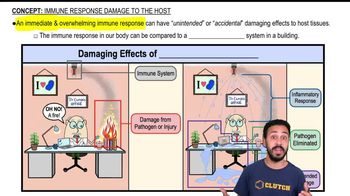
Intro to Immune Response Damage