Ch. 6 - Microbial Nutrition and Growth
Bauman - Microbiology with Diseases by Taxonomy 6th Edition
Bauman6th EditionMicrobiology with Diseases by TaxonomyISBN: 9780134832302당신이 사용하는 게 아니라요?교과서 변경
6장, 문제 7

Obligate ___________ exist in salt ponds because of their ability to withstand high osmotic pressure.

검증된 단계별 안내
1
Identify the key term related to organisms that thrive in environments with high salt concentrations, such as salt ponds.
Understand that 'obligate' refers to organisms that require a specific condition to survive, in this case, high salt concentration.
Recall that organisms adapted to high osmotic pressure environments are called 'halophiles', which means 'salt-loving'.
Recognize that 'obligate halophiles' are those that must live in high-salt environments because they depend on such conditions for their cellular processes.
Conclude that the blank should be filled with 'halophiles' to describe organisms that exist in salt ponds due to their ability to withstand high osmotic pressure.

비슷한 문제에 대한 검증된 영상 답변:

이 영상 해법은 위 문제에 도움이 된다고 튜터들이 추천한 것입니다.
영상 길이:
2m

주요 개념

질문에 올바르게 답하기 위해 반드시 이해해야 하는 핵심 개념들은 다음과 같습니다.

Obligate Halophiles

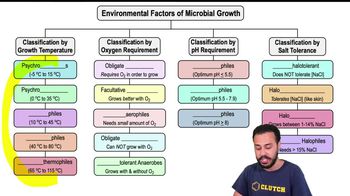
Obligate halophiles are microorganisms that require high salt concentrations for growth. They thrive in environments like salt ponds where salt levels are extremely high, which would inhibit or kill most other organisms.
추천 영상:
07:21
Reviewing the Environmental Factors of Microbial Growth

Osmotic Pressure

Osmotic pressure is the force exerted by solutes in a solution that draws water across a semipermeable membrane. High osmotic pressure in salt ponds causes water to move out of cells, so organisms must adapt to prevent dehydration.
추천 영상:
02:37
High Pressure Processing

Adaptations to High Salt Environments

Microbes in high-salt environments adapt by accumulating compatible solutes or using specialized proteins to maintain cell integrity and function. These adaptations allow them to survive and reproduce despite extreme osmotic stress.
추천 영상:
05:47
Introduction to Adaptive Immunity