뒤로
뒤로
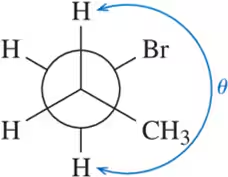
문제 23(c)
Calculate the dihedral angle (θ) for the conformations shown.
(c)
문제 23c
Calculate the dihedral angle (θ) for the conformations shown.
(c)
문제 24
Why is it incorrect to say that the dihedral angle shown is 120° or even 109°?
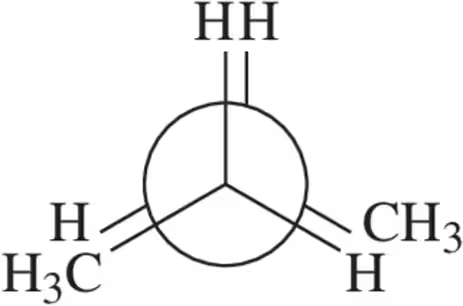
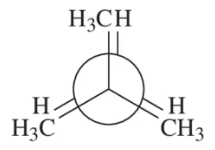
문제 26a
Calculate the total strain in the eclipsed conformations shown.
(a)
문제 26b
Calculate the total strain in the eclipsed conformations shown.
(b)
문제 27
Would you expect a CH3/CH3 eclipsing interaction to be larger or smaller than 1.3 kcal/mol?
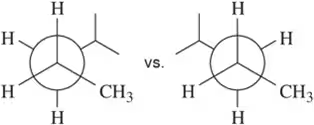
문제 29a
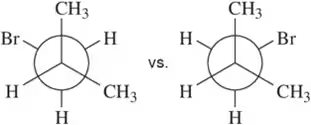
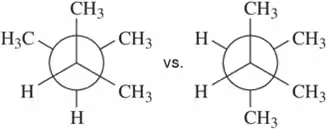
Choose the conformation in each pair that is most stable. If both are equally stable, then write 'no difference.'
(a)
문제 30
For each of the pairs in Assessment 3.29, which conformation would you expect to be more prominent at equilibrium?
(a)
(b)
(c)
문제 32a
Name the following cycloalkanes using the IUPAC system of nomenclature. [Hint: Each molecule exemplifies one of the cycloalkane nomenclature rules in Table 3.10.]
(a) rule 1
문제 32c
Name the following cycloalkanes using the IUPAC system of nomenclature. [Hint: Each molecule exemplifies one of the cycloalkane nomenclature rules in Table 3.10.]
(c) rule 2
문제 32e
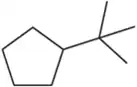
Name the following cycloalkanes using the IUPAC system of nomenclature. [Hint: Each molecule exemplifies one of the cycloalkane nomenclature rules in Table 3.10.]
(e) rule 3
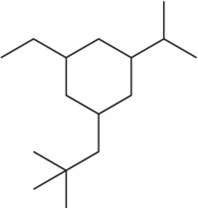
문제 32g
Name the following cycloalkanes using the IUPAC system of nomenclature. [Hint: Each molecule exemplifies one of the cycloalkane nomenclature rules in Table 3.10.]
(g) rule 4
문제 33
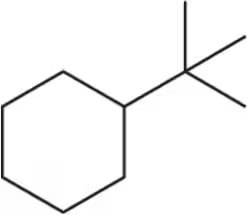
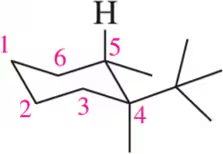
Name the following cycloalkanes using the IUPAC system of nomenclature.
문제 34b
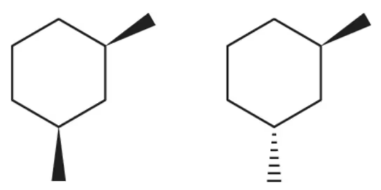
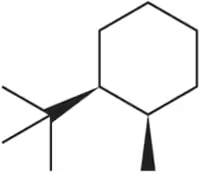
Name the following cycloalkanes using the IUPAC system of nomenclature, being sure to indicate whether they are cis or trans.
(b)
문제 36
Rank the following compounds in order of their total heat of combustion. These compounds are constitutional isomers, each with a molecular formula of C6H12.
문제 39a
Draw two chair conformations of the molecules below. Indicate which is most stable.
(a)
문제 40b
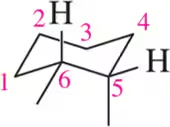
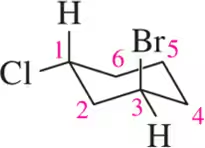
Given the following chair conformations, draw each in its planar form as if you were viewing it from above.
(b)
문제 40c
Given the following chair conformations, draw each in its planar form as if you were viewing it from above.
(c)
문제 40d
Given the following chair conformations, draw each in its planar form as if you were viewing it from above.
(d)
문제 41c
Draw two different chair conformations for each of the following molecules. Make sure that your drawings clearly show the cis–trans stereochemistry.
(c)
문제 42
For each pair of conformations you drew in Assessment 3.41, indicate which is most stable.
문제 43
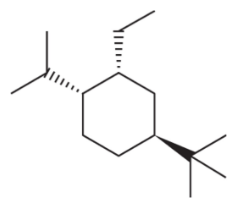
Draw the most stable chair conformation for the following trisubstituted cyclohexane.
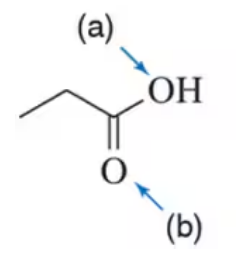
문제 44a
Based on the formal charge, determine how many lone pairs are on each indicated atom.
(a)
문제 45a
Modify the following line-angle drawings to show all lone pairs.
(a)
문제 45b
Modify the following line-angle drawings to show all lone pairs.
(b)
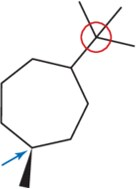
문제 46c
Given the line-angle drawings shown, answer the following questions:
(i) How many carbons are in each molecule?
(ii) How many hydrogens are at the circled carbon?
(iii) Is the indicated (→) carbon or 1° , 2°, 3°, or 4°?
(c)
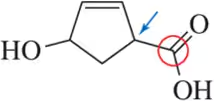
문제 46e
Given the line-angle drawings shown, answer the following questions:
(i) How many carbons are in each molecule?
(ii) How many hydrogens are at the circled carbon?
(iii) Is the indicated (→) carbon or 1° , 2°, 3°, or 4°?
(e)
문제 46f
Given the line-angle drawings shown, answer the following questions:
(i) How many carbons are in each molecule?
(ii) How many hydrogens are at the circled carbon?
(iii) Is the indicated (→) carbon or 1° , 2°, 3°, or 4°?
(f)
문제 46h
Given the line-angle drawings shown, answer the following questions:
(i) How many carbons are in each molecule?
(ii) How many hydrogens are at the circled carbon?
(iii) Is the indicated (→) carbon or 1° , 2°, 3°, or 4°?
(h)
문제 47c
Represent each of the following condensed structural formulas using a line-angle drawing.
(c) CH3CHOHCH2CHBrCH3