뒤로
뒤로
문제 2
What is the ground state electron configuration of carbon? How many bonds does carbon usually form?
문제 3a
What is the hybridization of carbon in each of the following molecules?
(a)
문제 3d
What is the hybridization of carbon in each of the following molecules?
(d)
문제 6a
How many hydrogens would you expect a 24-carbon compound from each of the following molecular classes to have?
(a) Alkane
문제 6b
How many hydrogens would you expect a 24-carbon compound from each of the following molecular classes to have?
(b) Alkene
문제 6c
How many hydrogens would you expect a 24-carbon compound from each of the following molecular classes to have?
(c) Alkyne
문제 7
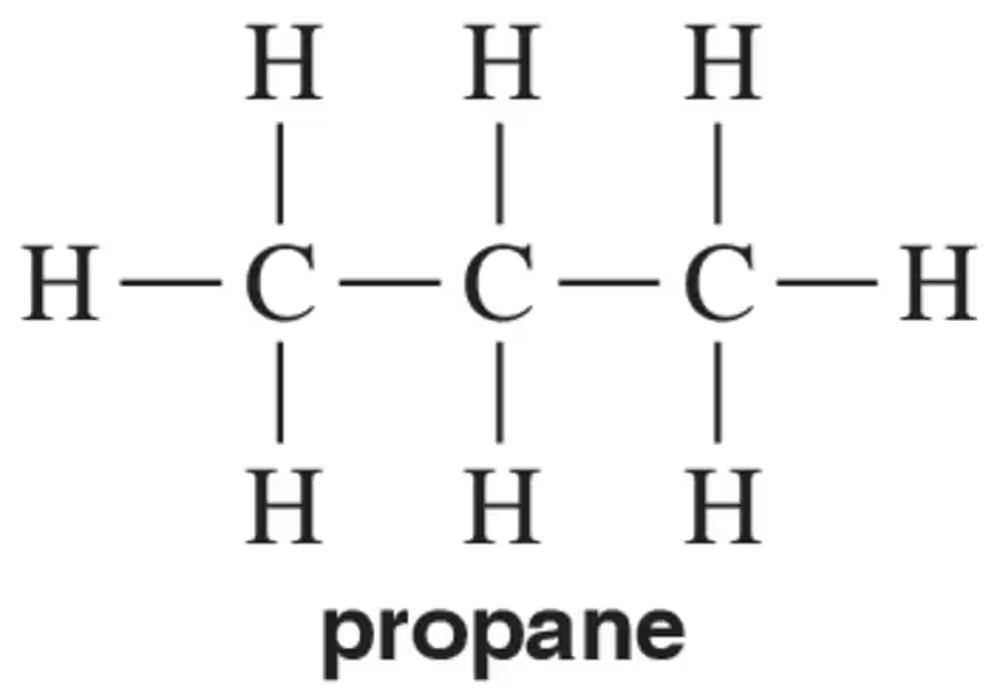
Draw the molecular orbital picture for propane. Your picture should clearly show the shape and hybridization of the carbons. Label all σ bonds.
문제 8a
Choose the molecule in each pair you'd expect to have the higher boiling point. Explain your reasoning.
(a) eicosane ( C20H42) vs pentadecane
문제 8b
Choose the molecule in each pair you'd expect to have the higher boiling point. Explain your reasoning.
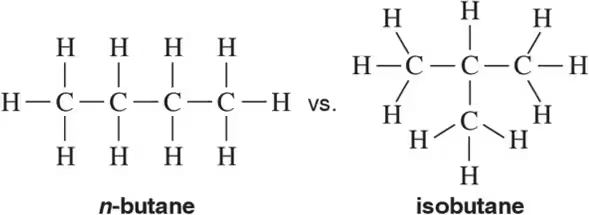
(b)
문제 9a
Rank the following molecules from least water soluble to most water soluble. Explain your reasoning.
(a) H3C ― OH
문제 9b
Rank the following molecules from least water soluble to most water soluble. Explain your reasoning.
(b) LiCl
문제 9e
Rank the following molecules from least water soluble to most water soluble. Explain your reasoning.
(e) CH3CH2CH2CH2CH3
문제 10b
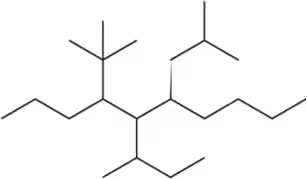
For each of the following line-angle drawings,
(i) give the number of carbons,
(ii) label the carbons,
(iii) tell how many hydrogens are on each carbon, and
(iv) draw the hybrid structural formula.
(b)
문제 10c
For each of the following line-angle drawings,
(i) give the number of carbons,
(ii) label the carbons,
(iii) tell how many hydrogens are on each carbon, and
(iv) draw the hybrid structural formula.
(c)
문제 10d
For each of the following line-angle drawings,
(i) give the number of carbons,
(ii) label the carbons,
(iii) tell how many hydrogens are on each carbon, and
(iv) draw the hybrid structural formula.
(d)
문제 11b
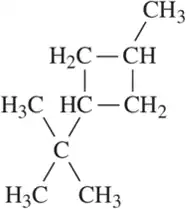
Convert the following hybrid structural formulas into the line-angle drawings.
(b)
문제 13a
There are five alkane constitutional isomers with the molecular formula C6H14. Draw them.
문제 14a
There are nine alkane constitutional isomers with the molecular formula C7H16. Draw them.
문제 15j
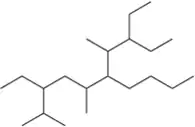
Name the following alkanes using the IUPAC system of nomenclature. [Each molecule exemplifies one of the nomenclature rules in Tables 3.7 and 3.8.]
(j) rule 5
문제 15k
Name the following alkanes using the IUPAC system of nomenclature. [Each molecule exemplifies one of the nomenclature rules in Tables 3.7 and 3.8.]
(k) rule 6
문제 15n
Name the following alkanes using the IUPAC system of nomenclature. [Each molecule exemplifies one of the nomenclature rules in Tables 3.7 and 3.8.]
(n) rule 7
문제 16b
When we begin studying functional groups, the designation of substitution will be especially important. Label the following bromoalkanes as 1° , 2°, 3°, or 4° based on the carbon to which the bromine is attached.
(b)
문제 17b
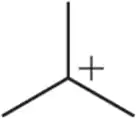
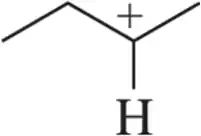
When we begin studying reactive intermediates, the designation of substitution will be especially important. Label the following carbocations as 1° , 2°, 3°, or 4° or based on the carbon bearing the positive charge.
(b)
문제 17c
When we begin studying reactive intermediates, the designation of substitution will be especially important. Label the following carbocations as 1° , 2°, 3°, or 4° or based on the carbon bearing the positive charge.
(c)
문제 19c
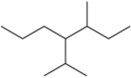
Name the following alkanes using the common names for branched substituents.
(c)
문제 20
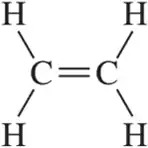
In Chapter 8, we study the chemistry of alkenes, like ethene. In contrast to ethane, there is no free rotation around the C = C double bond of ethene. Explain this in the context of the molecular orbital picture of ethene.
문제 21d
For each molecule, draw the Newman projection you would observe if you looked down the Ca - Cb bond in the direction indicated.
(d) <IMAGE>
문제 22b
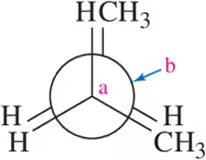
Using the Newman projections shown, draw each molecule in its line-angle drawing with all hydrogens and substituents shown. [Carbon b is behind carbon a in these structures.] Wedges and dashes should be used to indicate whether a substituent is coming out of, or going into, the plane of the page.
(b)
문제 22d
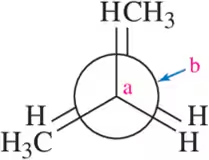
Using the Newman projections shown, draw each molecule in its line-angle drawing with all hydrogens and substituents shown. [Carbon b is behind carbon a in these structures.] Wedges and dashes should be used to indicate whether a substituent is coming out of, or going into, the plane of the page.
(d)
문제 23a
Calculate the dihedral angle (θ) for the conformations shown.
(a)