뒤로
뒤로
문제 21d,e
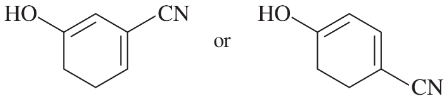
Choose the more acidic member of each pair of isomers, and show why the acid you chose is more acidic.
(d)
(e)
문제 21f,g
Choose the more acidic member of each pair of isomers, and show why the acid you chose is more acidic.
(f)
(g)
문제 22a,b
Choose the more basic member of each pair of isomers, and show why the base you chose is more basic.
(a)
(b)
문제 22c,d
Choose the more basic member of each pair of isomers, and show why the base you chose is more basic.
c.
d.
문제 22e
Choose the more basic member of each pair of isomers, and show why the base you chose is more basic.
e.
문제 23a
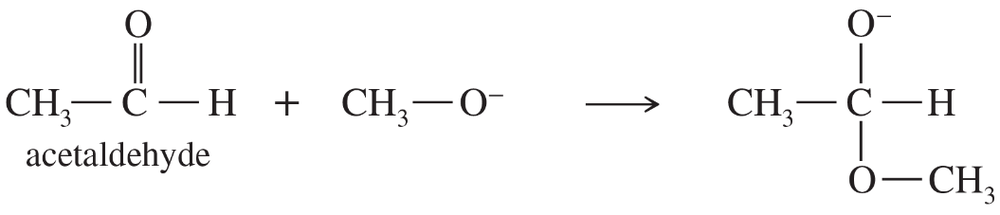
In the following acid–base reactions,
1. draw Lewis structures of the reactants and the products.
2. determine which species are acting as electrophiles (acids) and which are acting as nucleophiles (bases).
3. use the curved-arrow formalism to show the movement of electron pairs in these reactions, as well as the imaginary movement in the resonance hybrids of the products.
4. indicate which reactions are best termed Brønsted–Lowry acid–base reactions.
(a)
문제 23b
In the following acid–base reactions,
1. draw Lewis structures of the reactants and the products.
2. determine which species are acting as electrophiles (acids) and which are acting as nucleophiles (bases).
3. use the curved-arrow formalism to show the movement of electron pairs in these reactions, as well as the imaginary movement in the resonance hybrids of the products.
4. indicate which reactions are best termed Brønsted–Lowry acid–base reactions.
(b)
문제 24a,b,c
Classify the following hydrocarbons, and draw a Lewis structure for each one. A compound may fit into more than one of the following classifications:
alkane
alkene
alkyne
cycloalkane
cycloalkene
cycloalkyne
aromatic
hydrocarbon
a. (CH3CH2)2CHCH(CH3)2
b. CH3CHCHCH2CH3
c.. CH3CCCH2CH2CH3
문제 24d,e,f
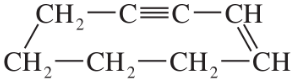
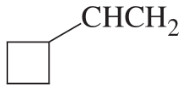
Classify the following hydrocarbons, and draw a Lewis structure for each one. A compound may fit into more than one of the following classifications:
alkane
alkene
alkyne
cycloalkane
cycloalkene
cycloalkyne
aromatic
hydrocarbon
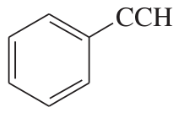
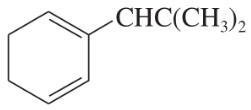
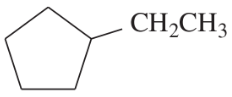
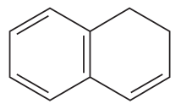
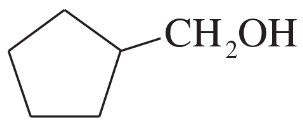
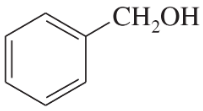
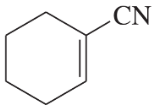
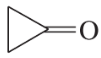
(d)
(e)
(f)
문제 24g,h,i
Classify the following hydrocarbons, and draw a Lewis structure for each one. A compound may fit into more than one of the following classifications:
alkane
alkene
alkyne
cycloalkane
cycloalkene
cycloalkyne
aromatic
hydrocarbon
(g)
(h)
(i)
문제 25a,b,c
Draw a Lewis structure, and classify each of the following compounds. The possible classifications are as follows:
alcohol
ether
ketone
aldehyde
carboxylic acid
alkene
(a) CH2CHCHO
(b) CH3CH2CH(OH)CH3
(c) CH3COCH2CH3
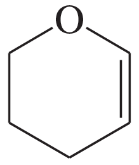
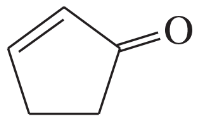
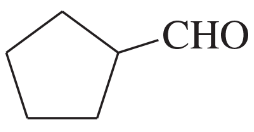
문제 25d,e
Draw a Lewis structure, and classify each of the following compounds. The possible classifications are as follows: alcohol ether ketone aldehyde carboxylic acid alkene
(d) CH3CH2OCHCH2
(e)
문제 25f,g
Draw a Lewis structure, and classify each of the following compounds. The possible classifications are as follows:
alcohol
ether
ketone
aldehyde
carboxylic acid
alkene
(f)
(g)
문제 25h,i
Draw a Lewis structure, and classify each of the following compounds. The possible classifications are as follows:
alcohol
ether
ketone
aldehyde
carboxylic acid
alkene
(h)
(i)
문제 26a,b
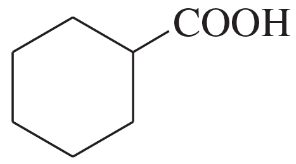
Draw a Lewis structure, and classify each of the following compounds:
(a) CH3CH2CONHCH3
(b) (CH3CH2)2NH
문제 26c,d
Draw a Lewis structure, and classify each of the following compounds:
(c) (CH3)2CHCOOCH3
(d) CH3CHCHCOCl
문제 26e,f
Draw a Lewis structure, and classify each of the following compounds:
(e) (CH3CH2)2O
(f) CH3CH2CH2CN
문제 26g,h
Draw a Lewis structure, and classify each of the following compounds:
(g) (CH3)3CCH2CH2COOH
(h)
문제 26i,j
Draw a Lewis structure, and classify each of the following compounds:
(i)
(j)
문제 26k,l
Draw a Lewis structure, and classify each of the following compounds:
(k)
(l)
문제 26m,n,o
Draw a Lewis structure, and classify each of the following compounds:
(m)
(n)
(o)
문제 27a,b,c
Circle the functional groups in the following structures. State to which class (or classes) of compounds the structure belongs.
a. CH2=CHCH2COOCH3
b. CH3OCH3
c. CH3CHO
문제 27d,e,f
Circle the functional groups in the following structures. State to which class (or classes) of compounds the structure belongs.
d. CH3CONH2
e. CH3NHCH3
f. RCOOH
문제 27g,h,i
Circle the functional groups in the following structures. State to which class (or classes) of compounds the structure belongs.
(g)
(h)
(i)
문제 28
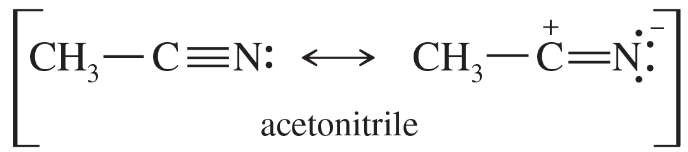
The C≡N triple bond in acetonitrile has a dipole moment of about 3.6 D and a bond length of about 1.16 Å. Calculate the amount of charge separation in this bond. How important is the charge-separated resonance form in the structure of acetonitrile?
문제 29a,b,c
For each of the following compounds,
1. draw the Lewis structure.
2. show how the bond dipole moments (and those of any nonbonding pairs of electrons) contribute to the molecular dipole moment.
3. estimate whether the compound will have a large, small, or zero dipole moment.
a. CH3CH=NCH3
b. CH3CH2OH
c. CBr4
문제 29d
For each of the following compounds,
1. draw the Lewis structure.
2. show how the bond dipole moments (and those of any nonbonding pairs of electrons) contribute to the molecular dipole moment.
3. estimate whether the compound will have a large, small, or zero dipole moment.
d.
문제 29e
For each of the following compounds,
1. draw the Lewis structure.
2. show how the bond dipole moments (and those of any nonbonding pairs of electrons) contribute to the molecular dipole moment.
3. estimate whether the compound will have a large, small, or zero dipole moment.
e.
문제 30
Sulfur dioxide has a dipole moment of 1.60 D. Carbon dioxide has a dipole moment of zero, even though C―O bonds are more polar than S―O bonds. Explain this apparent contradiction.
문제 31a-d
Which of the following pure compounds can form hydrogen bonds? Which can form hydrogen bonds with water? Which ones do you expect to be soluble in water?
a. (CH3CH2)2NH
b. (CH3CH2)3N
c. CH3CH2CH2OH
d. (CH3CH2CH2)2OH