Ch 01: Concepts of Motion
Knight Calc - Physics for Scientists and Engineers 5th Edition
Knight Calc5th EditionPhysics for Scientists and EngineersISBN: 9780137344796당신이 사용하는 게 아니라요?교과서 변경
1장, 문제 51c

Problems 49, 50, 51, and 52 show a partial motion diagram. For each: Draw a pictorial representation for your problem.

검증된 단계별 안내
1
Understand the problem: A motion diagram is a series of images or dots that represent the position of an object at equal time intervals. The task is to create a pictorial representation based on the given motion diagram.
Step 1: Analyze the motion diagram provided. Look at the spacing between the dots to determine the type of motion (e.g., constant velocity, acceleration, or deceleration). Larger spacing indicates faster motion, while smaller spacing indicates slower motion.
Step 2: Identify the key elements of the motion. For example, note the starting position, direction of motion, and any changes in speed or direction.
Step 3: Draw a coordinate system for your pictorial representation. Label the axes appropriately (e.g., position vs. time or a physical representation of the path).
Step 4: Represent the object's motion on the diagram. Use arrows to indicate the direction of motion and adjust the length of the arrows to reflect changes in speed. Include any relevant details, such as initial and final positions, and label them clearly.

비슷한 문제에 대한 검증된 영상 답변:

이 영상 해법은 위 문제에 도움이 된다고 튜터들이 추천한 것입니다.
영상 길이:
5m
도움이 되었나요?

주요 개념

질문에 올바르게 답하기 위해 반드시 이해해야 하는 핵심 개념들은 다음과 같습니다.

Motion Diagrams

Motion diagrams are visual representations that illustrate the position of an object at various points in time. They typically consist of a series of dots or arrows that indicate the object's trajectory and velocity. Understanding motion diagrams is essential for analyzing the kinematics of an object, as they help visualize how an object moves through space over time.
추천 영상:
가이드 코스
08:07
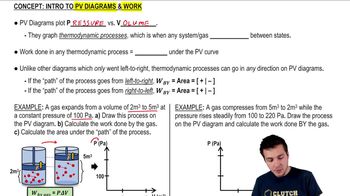
Work and PV Diagrams

Pictorial Representation

A pictorial representation is a visual depiction of a scenario or problem, often used to simplify complex concepts. In physics, this can include sketches, diagrams, or graphs that convey information about the motion, forces, or energy involved in a situation. Creating a clear pictorial representation aids in understanding the relationships between different physical quantities and enhances problem-solving skills.
추천 영상:
가이드 코스
04:25
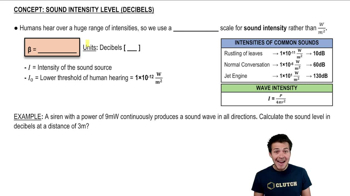
Sound Intensity Level and the Decibel Scale

Kinematics

Kinematics is the branch of physics that deals with the motion of objects without considering the forces that cause the motion. It involves analyzing parameters such as displacement, velocity, and acceleration. A solid grasp of kinematics is crucial for interpreting motion diagrams and creating accurate pictorial representations, as it provides the foundational principles needed to describe how objects move.
추천 영상:
가이드 코스
08:25
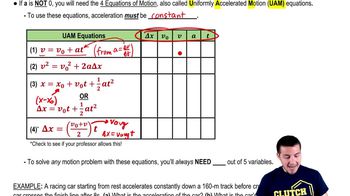
Kinematics Equations