What is the main purpose of the dynamic AD-AS model in macroeconomics?
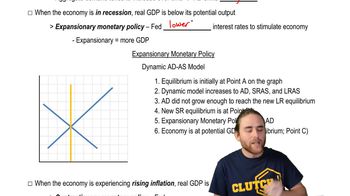
The dynamic AD-AS model illustrates how aggregate demand and supply change over time and how monetary policy can be used to maintain long run equilibrium.
How does expansionary monetary policy affect interest rates?
Expansionary monetary policy lowers interest rates by increasing the money supply.
What is the goal of expansionary monetary policy during a recession?
The goal is to stimulate spending and increase aggregate demand to reach potential GDP and restore long run equilibrium.
What happens to aggregate demand when the Fed implements expansionary monetary policy?
Aggregate demand increases as lower interest rates encourage more spending and investment.
In the dynamic AD-AS model, what shifts to the right over time under normal conditions?
Long run aggregate supply, short run aggregate supply, and aggregate demand all shift to the right over time.
What can cause a recession in the dynamic AD-AS model?
A recession can occur if aggregate demand does not grow as much as long run aggregate supply and short run aggregate supply.
How does contractionary monetary policy affect interest rates?
Contractionary monetary policy raises interest rates by reducing the money supply.
What is the purpose of contractionary monetary policy during inflationary periods?
Its purpose is to reduce aggregate demand and stabilize prices by making borrowing more expensive.
How does contractionary monetary policy impact investment and consumption?
It reduces investment and consumption because higher interest rates discourage borrowing and spending.
What happens to aggregate demand when contractionary monetary policy is used?
Aggregate demand decreases as higher interest rates lead to less spending and investment.
What is the result of synchronized growth among LRAS, SRAS, and AD in the dynamic model?
Synchronized growth keeps the economy at long run equilibrium, avoiding recessions and inflation.
What does the Fed do to the money supply during expansionary monetary policy?
The Fed increases the money supply to lower interest rates and boost aggregate demand.
What does the Fed do to the money supply during contractionary monetary policy?
The Fed decreases the money supply to raise interest rates and reduce aggregate demand.
How does the dynamic AD-AS model show the effects of monetary policy on equilibrium?
It shows how shifts in aggregate demand, caused by monetary policy, move the economy toward or away from long run equilibrium.
Why is it important for aggregate demand to align with long run aggregate supply in the dynamic model?
Alignment ensures the economy operates at potential GDP, preventing prolonged recessions or inflation.
 Back
Back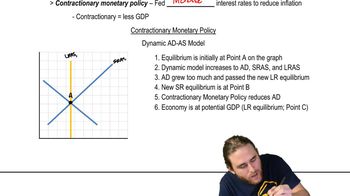
 03:15
03:15