Back

5) Avoiding Antibodies definitions

Control buttons has been changed to "navigation" mode.
1/14
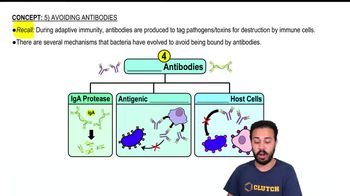
  • IgA Protease

    An enzyme produced by certain bacteria that specifically degrades antibodies found in mucus membranes, allowing evasion of the adaptive immune response.
  • Antigenic Variation

    A process where bacteria frequently alter their surface antigens, preventing effective antibody binding and staying ahead of immune detection.
  • Mucus Membrane

    A protective barrier lined with secreted mucus and local antibodies, serving as a frontline defense against pathogens.
  • Surface Antigen

    A molecule present on the exterior of bacteria that can be recognized by immune cells and targeted by antibodies.
  • Plasma Cell

    A differentiated immune cell that secretes large quantities of antibodies specific to detected antigens.
  • Central Tolerance

    A mechanism by which the immune system avoids attacking self cells during immune cell development.
  • Peripheral Tolerance

    A process that prevents immune responses against self molecules outside of primary immune organs.
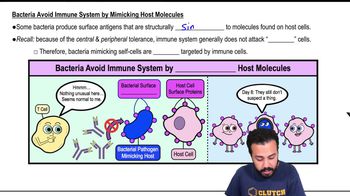
  • Molecular Mimicry

    A strategy where bacteria produce surface molecules structurally similar to host cell components, avoiding immune detection.
  • Adaptive Immune Response

    A targeted defense involving antibody production and immune cell activation, tailored to specific pathogens.
  • B Cell

    A lymphocyte that recognizes specific antigens, proliferates, and differentiates into antibody-secreting cells.
  • Antibody

    A protein produced by immune cells that binds to specific antigens, tagging pathogens for destruction.
  • Pathogen

    A microorganism capable of causing disease, often targeted by the immune system.
  • Self Cell

    A host cell recognized as part of the body, typically not targeted by the immune system due to tolerance mechanisms.
  • Immune Evasion

    A collection of strategies used by bacteria to avoid detection or destruction by the host immune system.