Back

Activation Pathways of the Complement System definitions

Control buttons has been changed to "navigation" mode.
1/14
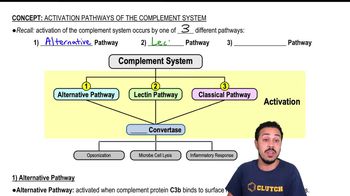
  • Complement System

    A group of proteins in blood plasma that, when activated, enhance immune responses like inflammation, opsonization, and microbe lysis.
  • Alternative Pathway

    A route of complement activation initiated by C3b binding directly to microbial surfaces, independent of antibodies.
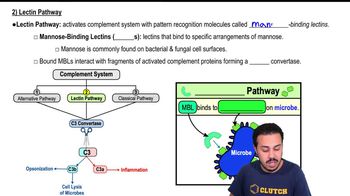
  • Lectin Pathway

    A complement activation route triggered by mannose-binding lectins recognizing mannose on microbial surfaces.
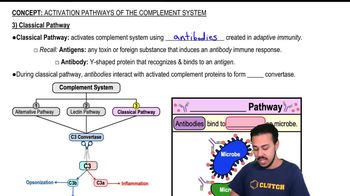
  • Classical Pathway

    A complement activation route initiated by antibodies binding to antigens on microbes, linking innate and adaptive immunity.
  • C3 Convertase

    An enzyme complex formed in all complement pathways that cleaves C3 into C3a and C3b, amplifying immune responses.
  • C3b

    A complement protein fragment that binds to microbes, promoting opsonization and further complement activation.
  • C3a

    A small peptide generated from C3 cleavage that promotes inflammation during immune responses.
  • Opsonization

    A process where microbes are marked for enhanced phagocytosis by immune cells, often via C3b binding.
  • Cell Lysis

    Destruction of microbial cells by membrane attack complexes formed during complement activation.
  • Inflammation

    A localized immune response characterized by redness, heat, and swelling, often triggered by complement fragments like C3a.
  • Mannose-Binding Lectin

    A pattern recognition protein that binds mannose residues on microbes, initiating the lectin pathway.
  • Antibody

    A Y-shaped protein produced by adaptive immunity that binds specifically to antigens on microbes.
  • Antigen

    A foreign molecule, often on microbes, that elicits an immune response and is recognized by antibodies.
  • Adaptive Immunity

    A specific immune defense system involving antibodies that can remember and target particular pathogens.