Animal Viruses: 2. Entry & Uncoating in the Host Cell quiz #1 Flashcards
Animal Viruses: 2. Entry & Uncoating in the Host Cell quiz #1
You can tap to flip the card.
Control buttons has been changed to "navigation" mode.
1/10
Terms in this set (10)
What happens after a virus has entered a host cell and undergone uncoating?
After a virus enters a host cell and uncoats, its nucleic acid (genome) is released into the cell's cytoplasm. This allows the viral genome to proceed to the next steps of infection, such as replication and synthesis of viral components.
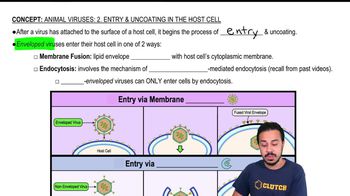
Which type of virus can enter a host cell by both membrane fusion and endocytosis?
Enveloped viruses can enter a host cell by both membrane fusion and endocytosis.
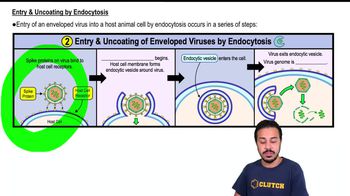
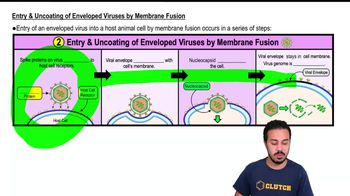
What role do spike proteins play in the entry of animal viruses into host cells?
Spike proteins bind to host cell receptors, initiating the entry process for both membrane fusion and endocytosis.
During membrane fusion, what happens to the viral envelope?
The viral envelope fuses with the host cell's cytoplasmic membrane and remains embedded in it.
What is the main difference in how non-enveloped viruses enter host cells compared to enveloped viruses?
Non-enveloped viruses can only enter host cells via endocytosis, while enveloped viruses can use either membrane fusion or endocytosis.
After endocytosis, how does the virus escape the endocytic vesicle?
The virus exits the endocytic vesicle, allowing the nucleocapsid to uncoat and release its nucleic acid.
What is the nucleocapsid composed of in animal viruses?
The nucleocapsid consists of the viral protein coat and the nucleic acid genome inside.
What is receptor-mediated endocytosis in the context of animal virus entry?
Receptor-mediated endocytosis is when the host cell forms an endocytic vesicle around the virus after the virus binds to cell receptors.
What happens to the viral genome during the uncoating process?
The viral genome is released from the protein coat into the host cell's cytoplasm.
Why can't non-enveloped viruses use membrane fusion to enter host cells?
Non-enveloped viruses lack a lipid envelope, so they cannot fuse with the host cell membrane and must use endocytosis instead.