Back

Animal Viruses: 4. Assembly Inside Host Cell definitions

Control buttons has been changed to "navigation" mode.
1/14
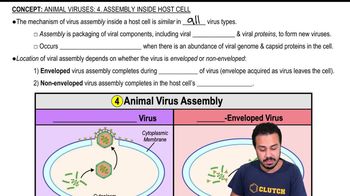
  • Assembly

    Spontaneous packaging of viral genome and proteins into new virus particles within a host cell.
  • Viral Genome

    Genetic material of a virus that is packaged during the formation of new virus particles.
  • Capsid Proteins

    Structural proteins that form the protective shell around the viral genome during virus formation.
  • Nucleocapsid

    Complex of viral nucleic acid and its surrounding protein shell, assembled in the cytoplasm.
  • Enveloped Virus

    Virus type that acquires an outer lipid layer from the host cell membrane during release.
  • Non-enveloped Virus

    Virus type lacking an outer lipid layer, completing assembly entirely within the cytoplasm.
  • Lipid Envelope

    Host-derived outer membrane acquired by certain viruses as they exit the host cell.
  • Cytoplasm

    Cellular region where viral components are synthesized and assembled into new viruses.
  • Release

    Final step following assembly, where newly formed viruses exit the host cell.
  • Animal Virus Infection

    Process involving entry, replication, assembly, and release of viruses in animal host cells.
  • Viral Proteins

    Molecules synthesized in the host cell that combine with the genome to form new viruses.
  • Cytoplasmic Membrane

    Host cell structure from which enveloped viruses derive their outer lipid layer during exit.
  • Mature Virus

    Fully assembled infectious particle, ready for release from the host cell.
  • Packaging

    Process of enclosing viral genetic material and proteins into a new virus particle.