Antigens quiz #1 Flashcards
You can tap to flip the card.
Control buttons has been changed to "navigation" mode.
1/10
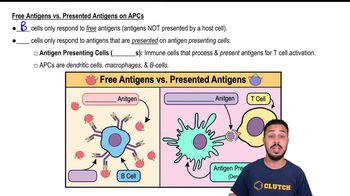
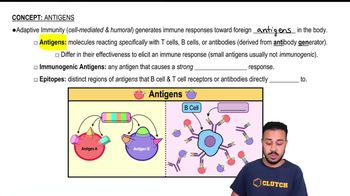
What specific region on an antigen do antibodies bind to?Antibodies specifically bind to epitopes, which are distinct regions on the antigen.What is an antigen in the context of immunology?An antigen is any molecule that specifically reacts with T cells, B cells, or antibodies.Antigens are usually ______.Antigens are usually molecules.What is any substance capable of provoking an immune response called?Any substance capable of provoking an immune response is called an antigen.What does the term 'antigen' stand for and how is it derived?The term 'antigen' stands for 'antibody generator' and is derived from its ability to generate antibodies in the immune system.Why are small antigens typically not immunogenic?Small antigens are usually not immunogenic because they do not elicit a strong immune response from the immune system.What is the role of antigen presenting cells (APCs) in T cell activation?APCs process and present antigens on their surface, which is necessary for the activation of T cells to initiate an immune response.Name three types of cells that can act as antigen presenting cells (APCs).Dendritic cells, macrophages, and B cells can all serve as antigen presenting cells (APCs).How do B cells and T cells differ in their response to antigens?B cells respond only to free-floating antigens, while T cells respond only to antigens that are presented by APCs.What happens when a free antigen binds to a B cell receptor (BCR)?Binding of a free antigen to a B cell receptor can lead to the activation of the B cell, enabling it to perform its immune functions.