Back

Chemical Methods to Control Microbial Growth definitions

Control buttons has been changed to "navigation" mode.
1/14
  • Sanitizer

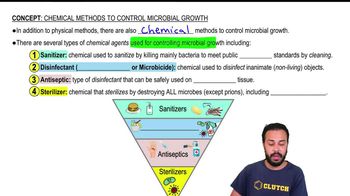
    A chemical that reduces bacteria to meet public health standards and enhances the appearance of cleanliness, often used on surfaces and hands.
  • Disinfectant

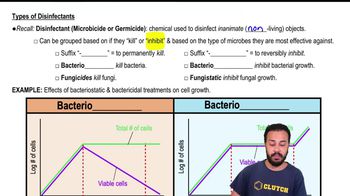
    A chemical, also called a germicide or microbicide, used on nonliving objects to kill most pathogens, though some may survive.
  • Antiseptic

    A disinfectant safe for application on living tissue, such as skin, to reduce microbial presence without causing harm.
  • Sterilizer

    A chemical capable of destroying all microbes, including endospores, but not prions, ensuring complete microbial elimination.
  • Germicide

    A synonym for disinfectant, referring to chemicals that kill a broad range of microbes on inanimate surfaces.
  • Microbicide

    A term interchangeable with disinfectant, indicating a chemical that targets and kills microorganisms on objects.
  • Bacteriocide

    A disinfectant that permanently kills bacteria, preventing any regrowth even after removal of the agent.
  • Fungicide

    A disinfectant that kills fungi, ensuring their elimination from treated surfaces.
  • Bacteriostatic

    A chemical that inhibits bacterial growth without killing, allowing bacteria to resume growth if the agent is removed.
  • Fungistatic

    A chemical that inhibits fungal growth reversibly, with fungi able to grow again once the agent is no longer present.
  • Organic Matter

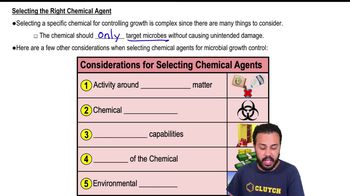
    Material containing carbon and hydrogen, such as soil, which can interfere with the effectiveness of chemical agents.
  • Toxicity

    The potential of a chemical agent to cause harm to humans or other non-target organisms, influencing its suitability.
  • Storage Capability

    The specific requirements for keeping a chemical agent stable and effective, such as temperature or pressure conditions.
  • Environmental Impact

    The potential for a chemical agent to act as a pollutant or cause ecological harm, affecting its selection for use.