Back

Chemotaxis definitions

Control buttons has been changed to "navigation" mode.
1/14
  • Chemotaxis

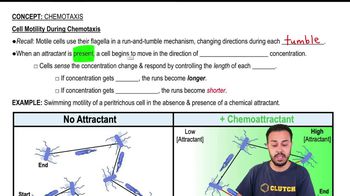
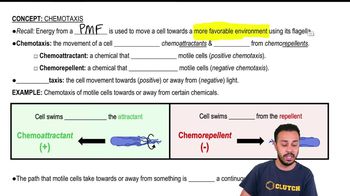
    Directed movement of a cell in response to chemical gradients, enabling approach to attractants or avoidance of repellents.
  • Chemoattractant

    A chemical substance that draws motile cells toward higher concentrations, guiding their movement.
  • Chemorepellant

    A chemical substance that causes motile cells to move away, promoting avoidance of unfavorable environments.
  • Positive Chemotaxis

    Cellular movement toward increasing concentrations of an attractant, resulting in net migration to favorable areas.
  • Negative Chemotaxis

    Cellular movement away from increasing concentrations of a repellent, steering cells from harmful conditions.
  • Phototaxis

    A specialized form of movement where cells respond to light, either approaching or retreating from its source.
  • Proton Motive Force

    Electrochemical gradient across a membrane that powers flagellar rotation, enabling cellular motility.
  • Flagella

    Whip-like appendages distributed on the cell surface, responsible for propelling cells during movement.
  • Run

    A straight, smooth swimming phase in which a cell moves in a single direction before changing course.
  • Tumble

    A brief, random reorientation event that interrupts straight movement, allowing directional changes.
  • Paratricous

    A pattern of flagellar distribution where appendages are spread over the entire cell surface, enhancing motility.
  • Swimming Motility

    The ability of cells to move through liquid environments using coordinated flagellar action.
  • Concentration Gradient

    A spatial variation in chemical concentration that cells can detect and respond to during navigation.
  • Net Movement

    The overall directional progress of a cell, determined by the balance of runs and tumbles in response to stimuli.