Back

Chlamydia definitions

Control buttons has been changed to "navigation" mode.
1/15
  • Chlamydia trachomatis

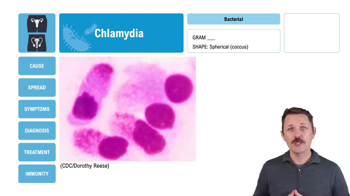
    Gram-negative, obligate intracellular bacterium responsible for the most common bacterial sexually transmitted infection.
  • Elementary bodies

    Infectious, metabolically inactive form found outside host cells, enabling transmission to new cells.
  • Reticulate bodies

    Larger, metabolically active form replicating within host cell vesicles, dependent on host metabolism.
  • Obligate intracellular pathogen

    Microbe that can only replicate inside host cell vesicles, unable to survive or multiply outside cells.
  • Non-gonococcal urethritis

    Urethral inflammation not caused by Neisseria gonorrhoeae, often linked to this bacterial infection.
  • Pelvic inflammatory disease

    Chronic inflammation of uterine tubes and uterus, leading to pain, fertility issues, and increased miscarriage risk.
  • Neonatal conjunctivitis

    Eye infection in newborns acquired during birth from infected mothers, potentially causing irritation or blindness.
  • Nucleic acid amplification test

    Sensitive diagnostic method, such as PCR, used to detect bacterial DNA in clinical samples.
  • Doxycycline

    Antibiotic commonly used to treat this infection, with high effectiveness and minimal resistance.
  • Azithromycin

    Single-dose antibiotic option for effective treatment, offering convenience and low resistance rates.
  • Asymptomatic infection

    Condition where individuals carry the bacterium without noticeable symptoms, increasing risk of undetected spread.
  • Epithelial cells

    Primary host cells targeted by the bacterium, lining the urethra, cervix, and other mucosal surfaces.
  • Condom use

    Preventive measure significantly reducing transmission by acting as a barrier at common infection sites.
  • Antibiotic resistance

    Phenomenon where bacteria survive despite antibiotic treatment; notably rare in this infection.
  • Cervicitis

    Inflammation of the cervix, often presenting with discharge or bleeding, and commonly associated with this infection.