Back

Effects of the Complement System definitions

Control buttons has been changed to "navigation" mode.
1/15
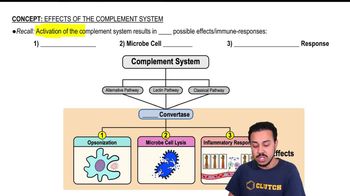
  • Complement System

    A group of plasma proteins that, when activated, trigger immune responses like opsonization, cell lysis, and inflammation.
  • C3 Convertase

    An enzyme complex formed during complement activation that initiates downstream immune responses by cleaving C3.
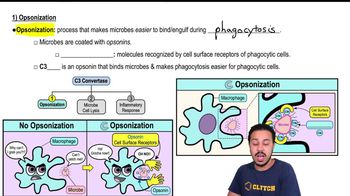
  • Opsonization

    A process where microbes are coated with molecules that enhance their recognition and uptake by phagocytes.
  • Opsonin

    A molecule, such as C3b, that binds to microbe surfaces, making them more easily targeted by phagocytic cells.
  • Phagocytosis

    A cellular process where immune cells engulf and digest microbes, made more efficient by opsonization.
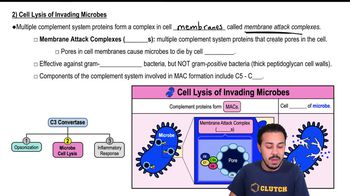
  • Membrane Attack Complex

    A structure formed by complement proteins C5–C9 that creates pores in microbe membranes, leading to cell lysis.
  • Cell Lysis

    Destruction of a microbe by rupture of its membrane, often caused by the insertion of a membrane attack complex.
  • Gram-Negative Bacteria

    Microbes with an outer lipid membrane susceptible to membrane attack complex-mediated lysis.
  • Gram-Positive Bacteria

    Microbes with a thick peptidoglycan wall, making them resistant to membrane attack complex-induced lysis.
  • Inflammatory Response

    An innate immune reaction marked by redness, swelling, and heat, often triggered by complement proteins.
  • C3a

    A complement protein fragment that promotes inflammation by inducing blood vessel dilation and mast cell degranulation.
  • C5a

    A complement protein fragment that enhances inflammation and recruits immune cells to infection sites.
  • Mast Cell

    A tissue-resident immune cell that releases histamine and cytokines upon activation by complement proteins.
  • Cytokine

    A signaling molecule released during inflammation that helps coordinate immune cell activity.
  • Histamine

    A chemical released from mast cells that increases blood vessel permeability and promotes inflammation.