Back

Endosymbiotic Theory definitions

Control buttons has been changed to "navigation" mode.
1/14
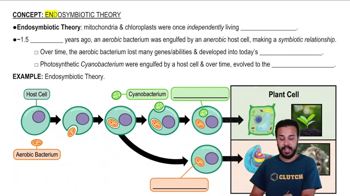
  • Endosymbiotic Theory

    A scientific explanation for the origin of mitochondria and chloroplasts as descendants of engulfed bacteria in eukaryotic cells.
  • Mitochondria

    An organelle in eukaryotic cells believed to have evolved from an aerobic bacterium, responsible for energy production.
  • Chloroplast

    A plant cell organelle derived from a photosynthetic cyanobacterium, enabling photosynthesis.
  • Eukaryotic Cell

    A complex cell type containing membrane-bound organelles, including mitochondria and, in plants, chloroplasts.
  • Aerobic Bacterium

    A type of bacteria that utilizes oxygen for metabolism and is considered the ancestor of mitochondria.
  • Anaerobic Host Cell

    A primitive cell lacking oxygen-based metabolism, which engulfed aerobic bacteria in early evolution.
  • Symbiotic Relationship

    A mutually beneficial association formed between two different organisms, such as host cells and engulfed bacteria.
  • Cyanobacterium

    A photosynthetic prokaryote thought to be the ancestor of chloroplasts in plant cells.
  • Prokaryote

    A simple, nucleus-lacking organism, such as bacteria, sharing features with mitochondria and chloroplasts.
  • Small Circular DNA

    A genetic structure found in mitochondria, chloroplasts, and prokaryotes, supporting their evolutionary connection.
  • 70S Ribosome

    A type of protein-synthesizing structure present in mitochondria, chloroplasts, and prokaryotes.
  • Binary Fission

    A method of asexual reproduction used by prokaryotes, mitochondria, and chloroplasts for self-replication.
  • Double Membrane

    A structural feature of mitochondria and chloroplasts, indicating their origin via engulfment by host cells.
  • Engulfment

    The process by which a host cell internalizes another cell, leading to the development of organelles.