Back

Endotoxin Causes Damage to the Host definitions

Control buttons has been changed to "navigation" mode.
1/15
  • Endotoxin

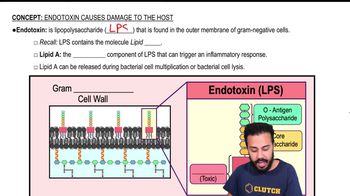
    A molecule in gram-negative bacteria's outer membrane responsible for triggering harmful host responses.
  • Lipopolysaccharide

    A complex molecule in the outer membrane of gram-negative bacteria, synonymous with endotoxin.
  • Lipid A

    The toxic region of lipopolysaccharide responsible for initiating damaging inflammatory responses.
  • Outer Membrane

    A protective layer in gram-negative bacteria housing endotoxin and contributing to pathogenicity.
  • Gram-negative Bacteria

    Microorganisms with a thin peptidoglycan layer and an outer membrane containing lipopolysaccharide.
  • O Antigen

    A variable polysaccharide region of lipopolysaccharide that differs among bacterial strains.
  • Core Polysaccharide

    A relatively conserved central region of lipopolysaccharide connecting O antigen and lipid A.
  • Cell Lysis

    The rupture of bacterial cells, leading to the release of toxic components like lipid A.
  • Septic Shock

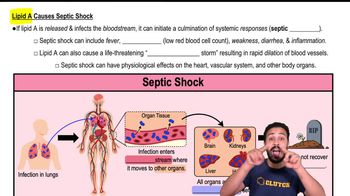
    A severe, systemic response to endotoxin release, marked by inflammation, organ dysfunction, and low blood pressure.
  • Cytokine Storm

    An overwhelming immune reaction with massive cytokine release, causing rapid blood vessel dilation and tissue damage.
  • Inflammation

    A host response triggered by endotoxin, leading to redness, swelling, and tissue injury.
  • Bloodstream

    The circulatory system compartment where lipid A can spread, causing widespread physiological effects.
  • Vascular System

    The network of blood vessels affected by endotoxin-induced dilation and pressure changes.
  • Peptidoglycan

    A structural component of bacterial cell walls, thinner in gram-negative bacteria.
  • Cytokines

    Signaling molecules released during immune responses, mediating inflammation and communication.