Back

Enzymes definitions

Control buttons has been changed to "navigation" mode.
1/15
  • Enzyme

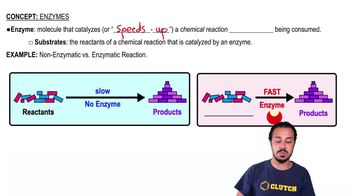
    A molecule that accelerates chemical reactions in cells without being changed or used up during the process.
  • Catalyst

    A substance that increases the rate of a chemical reaction, remaining unchanged after the reaction completes.
  • Substrate

    A reactant specifically involved in a reaction facilitated by a biological catalyst.
  • Reactant

    A starting material in a chemical reaction, not necessarily involving a biological catalyst.
  • Product

    A molecule formed as a result of a chemical reaction, following the transformation of starting materials.
  • Ribosome

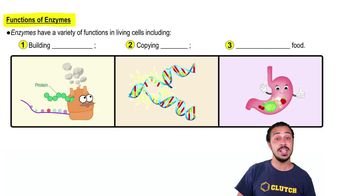
    A cellular structure acting as a biological catalyst to assemble proteins using genetic instructions.
  • DNA

    A genetic material whose duplication in cells is facilitated by biological catalysts to ensure genetic continuity.
  • Digestion

    A process in which complex food molecules are broken down into simpler forms with the help of biological catalysts.
  • Enzyme Activity

    A measure of how much product is generated by a biological catalyst within a specific time frame.
  • Temperature

    An environmental factor that can enhance or inhibit the function of biological catalysts depending on its level.
  • pH

    A measure of acidity or basicity that influences the efficiency and structure of biological catalysts.
  • Concentration

    The amount of reactant present, which can affect the rate at which a biological catalyst produces products.
  • Denaturation

    A structural alteration in a protein that leads to loss of function, often caused by extreme environmental conditions.
  • Protein

    A macromolecule often serving as a biological catalyst, whose structure is crucial for its function.
  • Optimal Conditions

    Specific environmental parameters where a biological catalyst achieves its highest efficiency and stability.