Back

Eukaryotic Chromatin Modifications definitions

Control buttons has been changed to "navigation" mode.
1/15
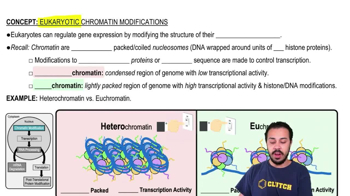
  • Chromatin

    A complex of DNA wrapped around histone proteins, forming the structural basis for gene regulation in the nucleus.
  • Nucleosome

    A structural unit of chromatin, consisting of DNA wound around a core of eight histone proteins.
  • Histone

    A protein component of nucleosomes, featuring tails that can be chemically modified to influence chromatin structure.
  • Euchromatin

    A loosely packed chromatin state that allows high transcriptional activity by making DNA accessible to transcription machinery.
  • Heterochromatin

    A tightly packed chromatin state that restricts access to DNA, resulting in low transcriptional activity.
  • Gene Expression

    The process by which genetic information is used to synthesize functional gene products, often regulated at the chromatin level.
  • Transcription

    The synthesis of RNA from a DNA template, influenced by chromatin accessibility and modifications.
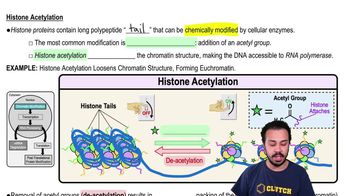
  • Histone Acetylation

    A modification where acetyl groups are added to histone tails, loosening chromatin and promoting gene activation.
  • Deacetylation

    The removal of acetyl groups from histone tails, resulting in tighter chromatin and reduced gene activity.
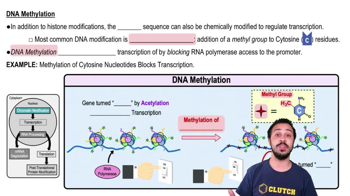
  • DNA Methylation

    A chemical modification involving the addition of methyl groups to cytosine nucleotides, often silencing gene expression.
  • Cytosine

    A DNA nucleotide that is commonly targeted for methylation, impacting gene regulation.
  • RNA Polymerase

    An enzyme responsible for synthesizing RNA from DNA, requiring access to open chromatin for function.
  • Promoter

    A DNA sequence where transcription machinery binds to initiate gene transcription, its accessibility regulated by chromatin state.
  • Histone Tail

    A polypeptide extension from histone proteins that serves as a site for chemical modifications affecting chromatin structure.
  • Functional Group

    A specific group of atoms, such as acetyl or methyl, that can be added to histones or DNA to alter chromatin properties.