Back

Experimental Design quiz

Control buttons has been changed to "navigation" mode.
1/15
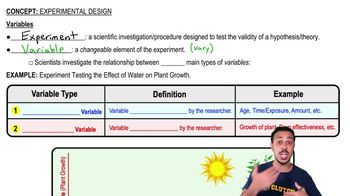
  • What is an experiment in the context of scientific investigation?

    An experiment is a scientific procedure designed to test the validity of a hypothesis or theory.
  • What is an independent variable in an experiment?

    An independent variable is the variable that is controlled or modified by the researcher.
  • Give two examples of independent variables.

    Examples include the age group of participants and the amount of a chemical used.
  • What is a dependent variable in an experiment?

    A dependent variable is the variable that is measured by the researcher to observe changes during the experiment.
  • Give two examples of dependent variables.

    Examples include plant growth and drug effectiveness.
  • On a typical experimental graph, where is the independent variable plotted?

    The independent variable is usually plotted on the x-axis (horizontal axis).
  • On a typical experimental graph, where is the dependent variable plotted?

    The dependent variable is usually plotted on the y-axis (vertical axis).
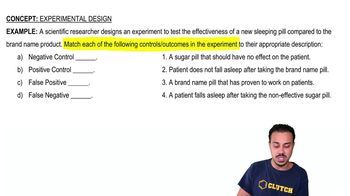
  • What is a false positive in an experiment?

    A false positive is an outcome that falsely indicates the presence of a result when it is not actually present.
  • What is a false negative in an experiment?

    A false negative is an outcome that falsely indicates the absence of a result when it is actually present.
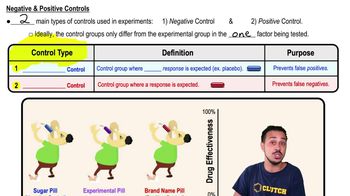
  • Why are control groups important in experiments?

    Control groups are important because they help prevent false positives and false negatives, ensuring reliable results.
  • What is a negative control and what is its purpose?

    A negative control is a group where no response is expected, and its purpose is to prevent false positives.
  • What is a positive control and what is its purpose?

    A positive control is a group where a response is expected, and its purpose is to prevent false negatives.
  • What is an example of a negative control in a drug experiment?

    An example is using a placebo, such as a sugar pill, which is not expected to have any effect.
  • What is an example of a positive control in a drug experiment?

    An example is using a brand name pill that has been proven effective in the past.
  • How do positive and negative controls help validate experimental results?

    They allow researchers to check for unexpected outcomes and ensure that the experimental setup can detect both the presence and absence of effects accurately.