Back

Fimbriae & Hami definitions

Control buttons has been changed to "navigation" mode.
1/12
  • Fimbriae

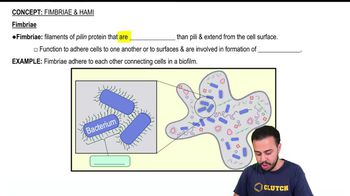
    Short filaments of pilon protein on bacterial surfaces, enabling cell-to-cell and cell-to-surface adhesion, crucial for biofilm development.
  • Pilon Protein

    Structural component forming short filaments on bacteria, facilitating attachment and interaction within microbial communities.
  • Biofilm

    Community of microbes encased in extracellular polymeric substances, allowing collective living and enhanced survival on surfaces.
  • Extracellular Polymeric Substance

    Matrix encasing microbial communities, providing structural support and protection within biofilms.
  • Hami

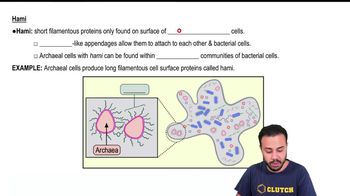
    Short, hook-like filamentous proteins unique to archaea, functioning as grapples for attachment to cells and surfaces in biofilms.
  • Archaeal Cells

    Microorganisms distinct from bacteria and eukarya, often possessing unique surface structures like hami for attachment.
  • Bacterial Cells

    Microbes with cell surfaces that may feature fimbriae, aiding in adhesion and biofilm participation.
  • Hook-like Appendages

    Surface projections resembling grapples, enabling archaeal cells to attach to each other and to bacterial cells.
  • Cell Surface

    Outer boundary of microbial cells where structures like fimbriae and hami extend to facilitate interactions.
  • Attachment

    Process by which microbial cells adhere to each other or to surfaces, often mediated by specialized surface proteins.
  • Microbial Community

    Group of interacting microorganisms living together, often within a biofilm matrix for mutual benefit.
  • Grapple

    Mechanism by which hook-like structures on archaea secure attachment to other cells or surfaces.