Back

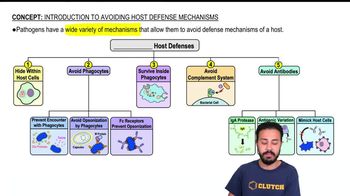
Introduction to Avoiding Host Defense Mechanisms definitions

Control buttons has been changed to "navigation" mode.
1/12
  • Pathogen

    A microorganism capable of causing disease by evading or overcoming host defense mechanisms.
  • Host Defense Mechanism

    A biological process or structure in the host that protects against infection by identifying and eliminating pathogens.
  • Phagocyte

    A type of immune cell specialized in engulfing and destroying microbes as part of the body's defense.
  • Opsonization

    A process where pathogens are marked for ingestion and elimination by immune cells, enhancing phagocytosis.
  • Capsule

    A protective outer layer found on some bacteria that helps prevent recognition and ingestion by immune cells.
  • Fc Receptor

    A protein on the surface of certain cells that binds to the constant region of antibodies, influencing immune responses.
  • Complement System

    A group of proteins in blood plasma that enhances immune responses by promoting inflammation and pathogen destruction.
  • IgA Protease

    An enzyme produced by some pathogens that degrades a specific antibody type, reducing immune effectiveness.
  • Antigenic Variation

    A strategy where pathogens alter surface molecules to evade recognition by the host's immune system.
  • Mimicry

    A tactic where pathogens resemble host molecules or cells to avoid detection by immune defenses.
  • Host Cell

    A cell in which a pathogen can reside or replicate, often used as a hiding place from immune attack.
  • Disease

    A condition resulting from the disruption of normal body functions due to infection by a pathogen.