Back

Introduction to B Lymphocytes definitions

Control buttons has been changed to "navigation" mode.
1/15
  • B Lymphocyte

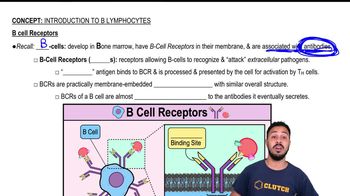
    A white blood cell developing in bone marrow, central to humoral immunity by producing antibodies against extracellular pathogens.
  • Humoral Immunity

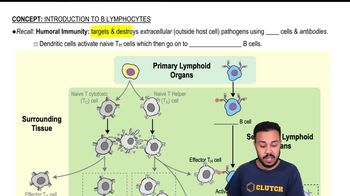
    A branch of adaptive immunity targeting extracellular pathogens using antibodies produced by specific lymphocytes.
  • Antibody

    A Y-shaped protein secreted to bind and neutralize antigens, with structure similar to certain cell surface receptors.
  • Antigen

    A molecule recognized as foreign, capable of binding to specific receptors and triggering an immune response.
  • B Cell Receptor

    A membrane-embedded immunoglobulin enabling recognition and binding of free-floating antigens, structurally similar to secreted antibodies.
  • Bone Marrow

    A primary lymphoid organ where certain lymphocytes fully develop before migrating to secondary immune sites.
  • Helper T Cell

    A lymphocyte that activates other immune cells by releasing cytokines after recognizing antigens presented on specific molecules.
  • MHC Class II Molecule

    A protein complex on antigen-presenting cells displaying processed antigens for recognition by certain T cells.
  • Plasma Cell

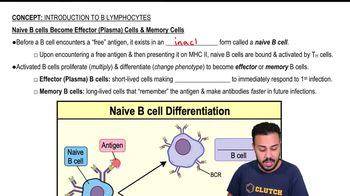
    A short-lived effector cell derived from lymphocytes, specialized in secreting large quantities of antibodies.
  • Memory B Cell

    A long-lived lymphocyte capable of rapid and robust response upon re-exposure to a previously encountered antigen.
  • Naive B Cell

    An inactive lymphocyte that has not yet encountered its specific antigen and remains undifferentiated.
  • Antigen-Binding Site

    A region on immunoglobulins or receptors that specifically interacts with and binds to a unique part of an antigen.
  • Cytokine

    A signaling molecule released by immune cells to modulate activation, proliferation, or differentiation of other cells.
  • Clonal Proliferation

    The process by which activated lymphocytes divide to produce identical copies, expanding the immune response.
  • Secondary Lymphoid Organ

    A site such as lymph nodes or spleen where mature lymphocytes encounter antigens and initiate immune responses.