Back

Introduction to Bacteriophage Infections definitions

Control buttons has been changed to "navigation" mode.
1/15
  • Bacteriophage

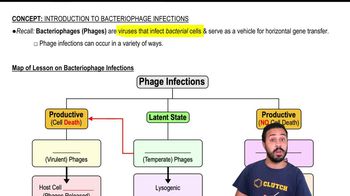
    A virus that specifically targets and infects bacterial cells, often facilitating gene transfer between bacteria.
  • Phage

    A general term for viruses that infect bacteria, capable of diverse infection cycles and genetic interactions.
  • Horizontal Gene Transfer

    The movement of genetic material between organisms, not by descent, often mediated by viruses in bacteria.
  • Transduction

    A process where bacterial genes are transferred from one cell to another via a viral carrier.
  • Productive Infection

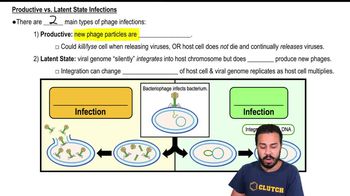
    A viral infection in which new virus particles are generated, possibly resulting in host cell death or continuous virus release.
  • Latent State Infection

    A viral state where the viral genome integrates into the host chromosome without producing new viruses.
  • Lytic Phage

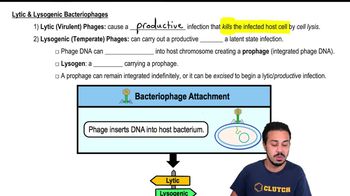
    A virus that causes host cell rupture and death by producing new viral particles in a productive infection.
  • Lysogenic Phage

    A virus capable of integrating its genome into the host chromosome, leading to either silent persistence or later activation.
  • Temperate Phage

    A virus with the ability to choose between a productive or a silent, integrated state within the host genome.
  • Prophage

    Viral DNA that has become part of the bacterial chromosome, remaining dormant but potentially reactivating.
  • Lysogen

    A bacterial cell that harbors integrated viral DNA within its chromosome, passing it to progeny.
  • Cell Lysis

    The rupture and destruction of a cell, often resulting in the release of newly formed viruses.
  • Filamentous Phage

    A virus that infects bacteria via pili, producing new viruses without killing the host cell.
  • Lysogenic Conversion

    A change in bacterial properties due to the presence of integrated viral DNA, sometimes preventing further infection.
  • Superinfection

    A secondary infection of a bacterium already carrying a prophage, often blocked by the initial viral integration.