Back

Introduction to Cultivating Microbial Growth definitions

Control buttons has been changed to "navigation" mode.
1/15
  • Culture Medium

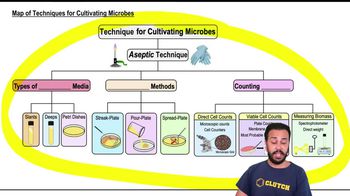
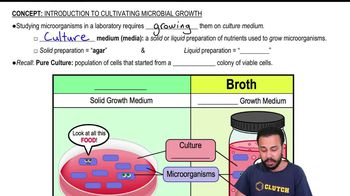
    A nutrient-rich preparation, either solid or liquid, used to support the growth of microorganisms in the lab.
  • Agar

    A solidified nutrient medium, commonly found in petri dishes, that provides a surface for microbial colonies to grow.
  • Broth

    A liquid nutrient medium that allows microorganisms to grow suspended within the solution.
  • Pure Culture

    A population of cells originating from a single viable cell, ensuring only one microbial species is present.
  • Petri Dish

    A shallow, circular container used to hold solid culture media for observing microbial growth.
  • Aseptic Technique

    A set of practices, such as using gloves and Bunsen burners, designed to prevent contamination during microbial handling.
  • Contamination

    The unintended introduction of unwanted microorganisms into a culture or environment.
  • Slant

    A tube of solidified agar set at an angle, providing an increased surface area for microbial growth.
  • Deep

    A tube of solidified agar in an upright position, used to study microbial growth patterns within the medium.
  • Streak Plate Method

    A technique for isolating individual colonies by spreading microbes across the surface of solid media.
  • Pour Plate Method

    A technique where diluted samples are mixed with molten agar and poured into dishes to count colonies.
  • Spread Plate Method

    A technique involving spreading a liquid sample evenly over the surface of solid media to isolate colonies.
  • Microscopic Count

    A direct cell counting method using a microscope to enumerate microorganisms in a sample.
  • Viable Count

    A method for determining the number of living cells, often using plate counts or filtration techniques.
  • Spectrophotometer

    An instrument that measures the turbidity of a microbial culture to estimate cell density or biomass.