Back

Introduction to First-Line Defenses definitions

Control buttons has been changed to "navigation" mode.
1/13
  • Innate Immunity

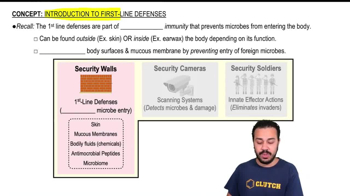
    A non-specific defense system present from birth that provides immediate protection against invading microbes.
  • First Line Defenses

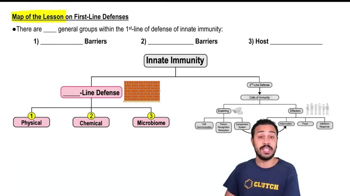
    Initial protective mechanisms that act as barriers to block microbes from entering body surfaces.
  • Physical Barriers

    Structural features like skin and mucus membranes that form a shield to block microbial entry.
  • Chemical Barriers

    Substances such as bodily fluids and antimicrobial peptides that inhibit or destroy invading microbes.
  • Host Microbiome

    Community of normal microorganisms residing on body surfaces that help prevent colonization by pathogens.
  • Skin

    A tough, external layer that acts as a primary shield, preventing microbes from penetrating the body.
  • Mucus Membranes

    Moist linings of internal passages that trap and help remove microbes from entering deeper tissues.
  • Ear Wax

    A protective secretion within the ear canal that traps and blocks entry of foreign microbes.
  • Bodily Fluids

    Liquids produced by the body, such as tears or saliva, that contain chemicals to neutralize microbes.
  • Antimicrobial Peptides

    Small proteins produced by cells that directly attack and disrupt microbial invaders.
  • Normal Microbiota

    Beneficial microorganisms naturally present on body surfaces, competing with pathogens for resources.
  • Security Walls

    A metaphor for the collective barriers that prevent microbes from breaching body defenses.
  • Second Line Defenses

    Backup immune responses activated if initial barriers are breached, discussed in later lessons.