Back

Koch's Postulates definitions

Control buttons has been changed to "navigation" mode.
1/15
  • Koch's Postulates

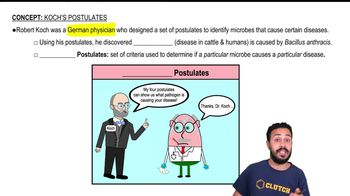
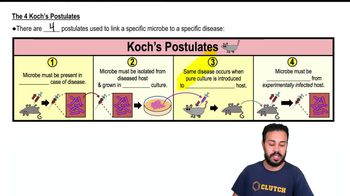
    A set of four criteria used to establish a causal relationship between a microbe and a specific disease.
  • Robert Koch

    A German physician from the late 1800s who formulated criteria to link microbes to diseases.
  • Pure Culture

    A laboratory sample containing only one species of microbe, isolated from a diseased host.
  • Pathogen

    A microorganism capable of causing disease in a host organism.
  • Susceptible Host

    An organism that can develop disease when exposed to a specific microbe.
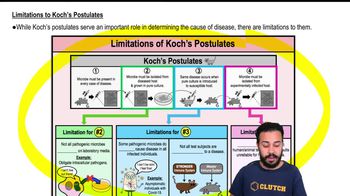
  • Obligate Intracellular Pathogen

    A microbe that can only grow and reproduce inside the cells of a host organism.
  • Asymptomatic Case

    An infected individual who does not display observable signs or symptoms of disease.
  • Ethical Concerns

    Moral issues that arise when conducting experiments, especially involving humans or animals.
  • Bacillus anthracis

    The bacterial species identified as the causative agent of anthrax in cattle and humans.
  • Laboratory Media

    Nutrient-rich substances used to grow and maintain microbes under controlled conditions.
  • Disease

    A condition in which normal physiological functions are disrupted by a microbe.
  • Immune Response

    The body's defense mechanism that can influence whether infection leads to disease symptoms.
  • Experimental Infection

    The deliberate introduction of a microbe into a host to observe disease development.
  • Isolation

    The process of separating a specific microbe from a diseased host for further study.
  • Limitation

    A factor that restricts the applicability or reliability of a scientific method or criterion.