Back

Light Microscopes that Increase Contrast definitions

Control buttons has been changed to "navigation" mode.
1/14
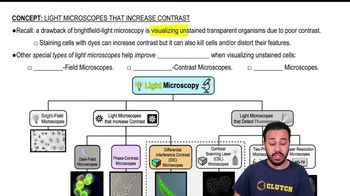
  • Bright Field Microscope

    Instrument producing images with a dark specimen on a bright background, often requiring staining for better visibility.
  • Contrast

    Degree of visual difference between a specimen and its background, crucial for distinguishing cell features.
  • Staining

    Process using dyes to color cells, enhancing visibility but potentially killing or distorting specimens.
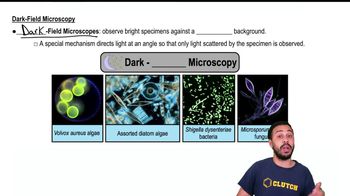
  • Dark Field Microscope

    Instrument creating images with a bright specimen on a dark background by detecting only scattered light.
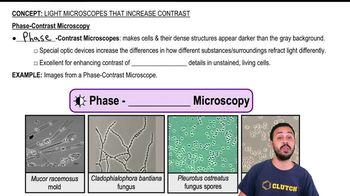
  • Phase Contrast Microscope

    Device using special optics to amplify light refraction differences, revealing internal details in unstained living cells.
  • Differential Interference Contrast Microscope

    Instrument generating highly detailed, three-dimensional images with added color contrast using advanced optics.
  • Optic Devices

    Complex components within microscopes that manipulate light to enhance image contrast and reveal fine details.
  • Background

    Visual field surrounding the specimen, which can be manipulated to improve specimen visibility in microscopy.
  • Three-dimensional Image

    Visual output providing depth and detail, making specimens appear to extend off the viewing surface.
  • Unstained Cell

    Living specimen observed without dyes, maintaining natural features but often requiring special microscopy for visibility.
  • Internal Structure

    Cellular components and organelles made visible by advanced contrast techniques without the need for staining.
  • Scattered Light

    Illumination redirected by a specimen, used in certain microscopes to enhance the specimen's visibility.
  • Grayish Background

    Neutral field often produced in phase contrast microscopy, making cells and structures appear darker for better contrast.
  • Live Specimen

    Organism or cell observed in its natural, undisturbed state, often requiring non-destructive imaging methods.