Back

Molecular Koch's Postulates definitions

Control buttons has been changed to "navigation" mode.
1/15
  • Molecular Koch's Postulates

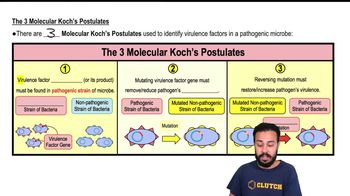
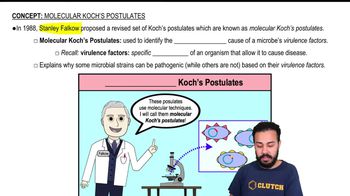
    A set of criteria using molecular techniques to identify genes responsible for a pathogen's ability to cause disease.
  • Virulence Factor

    A specific trait or molecule that enables a microbe to cause disease and distinguishes pathogenic from non-pathogenic strains.
  • Pathogenic Strain

    A microbial variant possessing genes or products that enable it to cause disease in a host.
  • Non-pathogenic Strain

    A microbial variant lacking genes or products necessary for causing disease, rendering it harmless.
  • Gene Mutation

    An alteration in the DNA sequence of a gene, which can reduce or eliminate a microbe's ability to cause disease.
  • Gene Product

    A molecule, often a protein, produced from gene expression that may contribute to a microbe's virulence.
  • Surface Protein

    A molecule located on the exterior of a microbe, often involved in interactions with the host and disease causation.
  • Disease Causation

    The process by which a microbe induces harmful effects in a host, often through specific molecular mechanisms.
  • Stanley Falkow

    A scientist who proposed the molecular version of Koch's postulates to clarify the genetic basis of microbial virulence.
  • Molecular Technique

    A laboratory method used to analyze or manipulate genes and their products to study microbial traits.
  • Reversal Mutation

    A genetic change that restores a mutated gene to its original form, often reinstating a microbe's ability to cause disease.
  • Virulence

    The degree or capacity of a microbe to cause disease, often determined by specific genetic factors.
  • Criteria

    A set of standards or requirements used to determine the role of a gene in microbial pathogenicity.
  • Microbial Strain

    A genetic variant or subtype of a microorganism, which may differ in its ability to cause disease.
  • Pathogen

    A microorganism capable of causing disease, often distinguished by the presence of specific virulence factors.