Back

Plant Viruses definitions

Control buttons has been changed to "navigation" mode.
1/15
  • Morphology

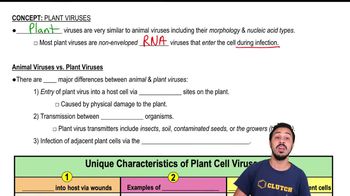
    Refers to the structural shape and form similarities shared between plant and animal viruses.
  • RNA Virus

    A type of virus whose genetic material is ribonucleic acid, commonly found in plant viral infections.
  • Non-enveloped Virus

    A viral particle lacking a lipid membrane, making up the majority of plant viruses.
  • Wound Site

    A physical break in the plant cell wall, often caused by insects, serving as an entry point for viruses.
  • Transmitter

    An agent such as insects, soil, seeds, or humans that facilitates the spread of plant viruses between hosts.
  • Plasmodesmata

    Cytoplasmic channels in plant cell walls that allow viruses to move directly between adjacent cells.
  • Virion

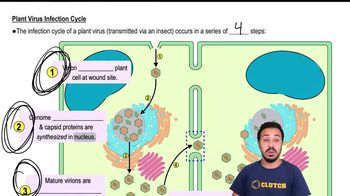
    A complete, mature viral particle capable of infecting plant cells and spreading the infection.
  • Capsid Protein

    A protein component synthesized in the nucleus that forms the protective shell around viral genetic material.
  • Genome Replication

    The process occurring in the nucleus where viral genetic material is duplicated during infection.
  • Cytoplasm

    The cellular region where assembly of new plant viral particles takes place after genome replication.
  • Cell Wall

    A rigid structure surrounding plant cells, which must be breached for viral entry and contains plasmodesmata.
  • Infection Cycle

    A sequence of events including entry, replication, assembly, and spread of plant viruses within host tissues.
  • Growth Inhibition

    A detrimental effect of plant viral infection, resulting in stunted or limited development of the host plant.
  • Seed Transmission

    The spread of plant viruses through contaminated seeds, enabling infection of new plants.
  • Adjacent Cell

    A neighboring plant cell that can be infected by viruses moving through plasmodesmata.