Back

Plant Viruses quiz

Control buttons has been changed to "navigation" mode.
1/15
  • What is the most common type of nucleic acid found in plant viruses?

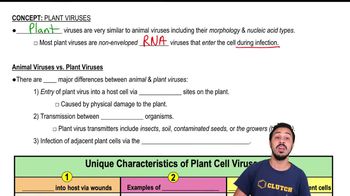
    Most plant viruses are non-enveloped RNA viruses.
  • How do plant viruses typically enter plant cells?

    Plant viruses enter plant cells through wound sites caused by physical damage.
  • What is a major difference between animal and plant virus entry into host cells?

    Animal viruses use host cell receptors for entry, while plant viruses enter through wounds in the plant.
  • Name two common transmitters of plant viruses.

    Insects and contaminated soil are common transmitters of plant viruses.
  • Why do plant viruses rely on transmitters for spreading between plants?

    Plants are immobile, so viruses depend on transmitters like insects, soil, seeds, or humans to move between plants.
  • What structure allows plant viruses to spread from one plant cell to another?

    Plant viruses spread to adjacent cells via plasmodesmata, which are openings in the cell walls.
  • List the four main steps in the plant virus infection cycle.

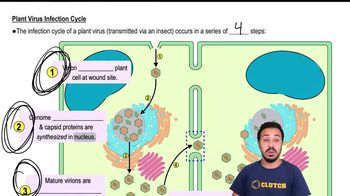
    The steps are: entry at a wound site, genome replication and capsid protein synthesis in the nucleus, assembly of virions in the cytoplasm, and spread to adjacent cells through plasmodesmata.
  • Where does genome replication and capsid protein synthesis occur during plant virus infection?

    Genome replication and capsid protein synthesis occur in the nucleus of the plant cell.
  • In which part of the plant cell are mature virions assembled?

    Mature virions are assembled in the cytoplasm of the plant cell.
  • What is the role of plasmodesmata in plant viral infections?

    Plasmodesmata allow plant viruses to move from one cell to neighboring cells, facilitating the spread of infection.
  • How can humans contribute to the transmission of plant viruses?

    Humans can act as transmitters by spreading viruses through contaminated hands, tools, or seeds.
  • What effect do plant viral infections typically have on plant growth?

    Plant viral infections usually stunt or inhibit plant growth and may even kill the plant.
  • What is the initial event that allows a plant virus to infect a plant cell?

    The initial event is the entry of the virus through a wound site in the plant.
  • How do plant viruses differ from animal viruses in terms of movement between organisms?

    Plant viruses require transmitters for movement between organisms, while animal viruses can spread as animals move.
  • What are some examples of physical damage that can create entry points for plant viruses?

    Physical damage can be caused by insects, humans, or environmental factors that wound the plant.