Back

Prokaryotic Gene Expression definitions

Control buttons has been changed to "navigation" mode.
1/15
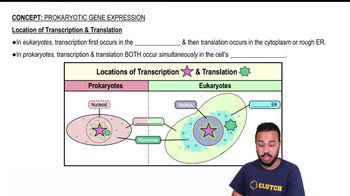
  • Nucleoid

    Region in prokaryotic cells where DNA is located and both transcription and translation occur, lacking a surrounding membrane.
  • Cytoplasm

    Cellular compartment in prokaryotes where transcription and translation take place simultaneously, enabling efficient gene expression.
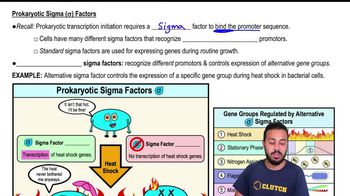
  • Sigma Factor

    Protein that binds to promoter sequences, guiding RNA polymerase to initiate transcription of specific genes in prokaryotes.
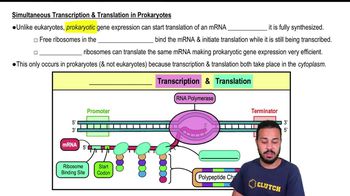
  • Promoter

    DNA sequence recognized by sigma factors, serving as the binding site for RNA polymerase to start transcription.
  • RNA Polymerase

    Enzyme recruited by sigma factors to synthesize mRNA from a DNA template during transcription in prokaryotes.
  • Messenger RNA

    Molecule transcribed from DNA that serves as the template for protein synthesis during translation; lacks introns in prokaryotes.
  • Ribosome

    Molecular machine that binds to mRNA in the cytoplasm, translating its sequence into a protein, often before mRNA synthesis is complete.
  • Polycistronic mRNA

    Single mRNA molecule carrying multiple genes, each with its own start and stop codon, common in prokaryotes.
  • Monocistronic mRNA

    mRNA molecule containing only one gene, typical in eukaryotes but also produced by prokaryotes.
  • Spacer

    Non-coding sequence found between genes on polycistronic mRNA, not to be confused with introns.
  • Exon

    Coding sequence present in both prokaryotic and eukaryotic mRNA; in prokaryotes, mRNA consists only of these regions.
  • Introns

    Non-coding sequences found within eukaryotic genes but absent in prokaryotic mRNA, requiring removal during RNA processing.
  • Alternative Sigma Factor

    Protein variant that recognizes different promoters, enabling expression of specific gene groups under unique conditions.
  • Standard Sigma Factor

    Protein responsible for initiating transcription of genes needed for routine growth in prokaryotes.
  • Heat Shock Protein

    Protective protein expressed in response to elevated temperatures, requiring specific sigma factors for gene activation.