Back

Prokaryotic Ribosomes definitions

Control buttons has been changed to "navigation" mode.
1/15
  • Prokaryotic Ribosome

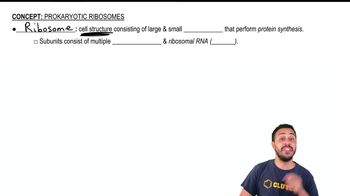
    A cellular structure in prokaryotes composed of two subunits, responsible for assembling proteins from amino acids.
  • Large Subunit

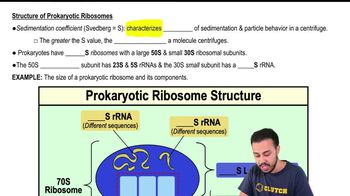
    The bigger component of a ribosome, containing 23S and 5S rRNA, essential for peptide bond formation during protein synthesis.
  • Small Subunit

    The smaller component of a ribosome, containing 16S rRNA, crucial for decoding messenger RNA during translation.
  • Svedberg Unit

    A measure of how fast particles sediment in a centrifuge, indicating size and shape rather than mass alone.
  • Sedimentation Coefficient

    A value reflecting the rate at which a particle moves in a centrifugal field, used to distinguish ribosomal subunits.
  • 50S Subunit

    The large ribosomal component in prokaryotes, containing both 23S and 5S rRNA, and multiple proteins.
  • 30S Subunit

    The small ribosomal component in prokaryotes, containing 16S rRNA and several proteins.
  • 23S rRNA

    A ribosomal RNA molecule in the large subunit, playing a key role in catalyzing peptide bond formation.
  • 5S rRNA

    A small ribosomal RNA found in the large subunit, contributing to ribosome stability and function.
  • 16S rRNA

    A ribosomal RNA in the small subunit, important for mRNA binding and ribosomal accuracy.
  • Protein Synthesis

    The cellular process where ribosomes assemble amino acids into polypeptides based on mRNA instructions.
  • Archaeal Ribosome

    A prokaryotic ribosome with unique rRNA sequences and more proteins per subunit compared to bacterial counterparts.
  • Bacterial Ribosome

    A prokaryotic ribosome with specific rRNA sequences and fewer proteins per subunit than archaeal ribosomes.
  • Antibiotic Susceptibility

    The degree to which ribosomes are affected by drugs targeting protein synthesis, differing between bacteria and archaea.
  • Active Site

    A region within the ribosome formed by three compartments, serving as the location for peptide chain assembly.