Back

Redox Reactions definitions

Control buttons has been changed to "navigation" mode.
1/14
  • Redox Reaction

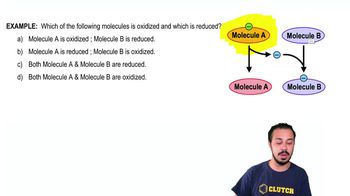
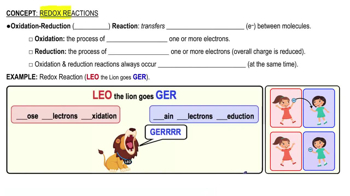
    A chemical process where electrons are transferred between molecules, always involving simultaneous electron loss and gain.
  • Oxidation

    The process involving the loss of one or more negatively charged electrons, resulting in an increase in overall charge.
  • Reduction

    The process involving the gain of one or more negatively charged electrons, leading to a decrease in overall charge.
  • Electron

    A negatively charged subatomic particle transferred during redox reactions, symbolized as e⁻.
  • Electron Carrier

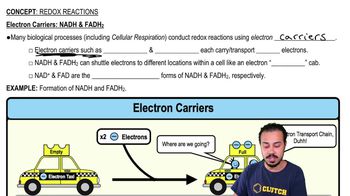
    A molecule that shuttles electrons within cells, often compared to a taxi cab transporting passengers.
  • NADH

    A reduced electron carrier that transports two electrons and a hydrogen ion, acting as a full 'taxicab' in cellular processes.
  • FADH2

    A reduced electron carrier that transports two electrons and two hydrogen ions, serving as a full 'taxicab' in metabolism.
  • NAD+

    An oxidized electron carrier form, representing an empty 'taxicab' ready to accept electrons and a hydrogen ion.
  • FAD

    An oxidized electron carrier form, representing an empty 'taxicab' ready to accept electrons and hydrogen ions.
  • NADPH

    A reduced electron carrier with a phosphate group, primarily used in biosynthetic reactions to build cellular structures.
  • NADP+

    An oxidized electron carrier with a phosphate group, acting as an empty 'construction truck' before gaining electrons.
  • Cellular Respiration

    A biological process where electron carriers transfer electrons to the electron transport chain, producing cellular energy.
  • Electron Transport Chain

    A series of molecules in cells where electrons from carriers like NADH and FADH2 are delivered to generate energy.
  • Biosynthetic Reaction

    A cellular process that constructs molecules and structures, often requiring electron carriers like NADPH.