Back

Regulatory T Cells quiz

Control buttons has been changed to "navigation" mode.
1/15
  • What is the main function of regulatory T cells (Tregs)?

    Tregs inhibit immune responses to prevent the immune system from attacking healthy cells and causing autoimmune reactions.
  • How do Tregs differ from cytotoxic and helper T cells?

    Unlike cytotoxic and helper T cells, which promote immune responses, Tregs inhibit and prevent immune responses.
  • What is the abbreviation commonly used for regulatory T cells?

    Regulatory T cells are commonly abbreviated as Tregs.
  • To which subset of T cells do Tregs belong?

    Tregs are a subset of helper T cells.
  • What role do Tregs play in autoimmune reactions?

    Tregs prevent autoimmune reactions by stopping the immune system from attacking the body's own healthy cells.
  • Why is it important for Tregs to prevent immune responses to harmless substances?

    Preventing immune responses to harmless substances avoids unnecessary inflammation and damage to healthy tissues.
  • What mechanism do Tregs use to inhibit other T cells during development?

    Tregs use peripheral tolerance mechanisms to inhibit self-reacting T cells during development.
  • What is peripheral tolerance in the context of Tregs?

    Peripheral tolerance refers to the process by which Tregs prevent immune responses against self cells outside the thymus.
  • What is still being actively researched about Tregs?

    The detailed roles and mechanisms of Tregs are still under active research.
  • How do Tregs help maintain immune system balance?

    Tregs prevent overreactions of the immune system, maintaining balance and preventing damage to healthy cells.
  • What happens if Tregs fail to function properly?

    If Tregs fail, the immune system may attack healthy cells, leading to autoimmune diseases.
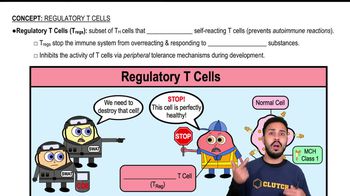
  • What visual analogy was used in the lesson to describe Tregs?

    Tregs were depicted as intervening to stop immune cells, like a SWAT team, from attacking normal, healthy cells.
  • What do Tregs say to other immune cells in the cartoon representation?

    Tregs tell other immune cells to stop and not attack perfectly healthy cells.
  • What type of proteins do healthy cells display on their MHCs in the context of Treg function?

    Healthy cells display normal cytoplasmic proteins on their MHCs.
  • What is the overall impact of Tregs on immune responses?

    Tregs inhibit immune responses, preventing overreaction and targeting of self cells.