Back

Steps of the Inflammatory Response definitions

Control buttons has been changed to "navigation" mode.
1/14
  • Inflammatory Response

    A four-step process triggered by tissue damage or infection, aiming to eliminate microbes but sometimes causing host tissue damage.
  • Tissue Damage

    An event allowing microbes to bypass innate defenses, initiating the first step of inflammation and potential infection.
  • Innate Immunity

    The body's first line of defense, including skin and mucous membranes, that prevents microbe entry before inflammation begins.
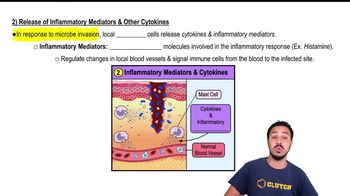
  • Mast Cells

    Tissue-resident immune cells similar to basophils, responsible for releasing cytokines and inflammatory mediators during inflammation.
  • Cytokines

    Signaling proteins released by immune cells that regulate inflammation and attract other immune cells to infection sites.
  • Inflammatory Mediators

    Messenger molecules, such as histamine, that promote inflammation by altering blood vessels and recruiting immune cells.
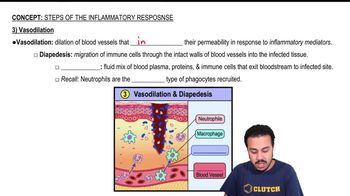
  • Vasodilation

    The enlargement of blood vessels, increasing permeability to allow immune cells to access infected tissues.
  • Diapedesis

    The migration of immune cells through intact blood vessel walls into infected tissue during inflammation.
  • Neutrophils

    The first phagocytic cells recruited to infection sites, responsible for engulfing and destroying microbes.
  • Macrophages

    Phagocytic cells that engulf microbes and dead cells, playing a key role in the final step of inflammation.
  • Phagocytosis

    A process where immune cells engulf and digest invading microbes and cellular debris at infection sites.
  • Exudate

    A fluid mixture of plasma, proteins, and immune cells that exits blood vessels to reach infected tissues.
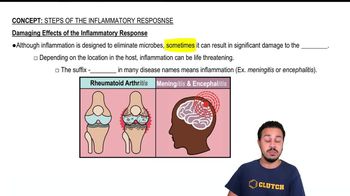
  • Inflammation

    A protective response to infection or injury, which can sometimes cause accidental host tissue damage.
  • Suffix '-itis'

    A word ending indicating inflammation, commonly found in disease names like meningitis or arthritis.