Back

Superinfections definitions

Control buttons has been changed to "navigation" mode.
1/14
  • Superinfection

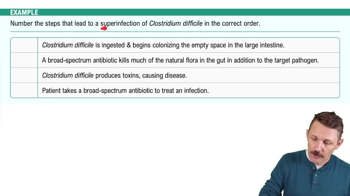
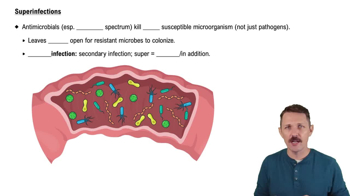
    A secondary infection arising during antimicrobial treatment, caused by resistant organisms occupying niches left by eliminated microbes.
  • Broad-spectrum antibiotic

    A drug targeting a wide range of bacteria, often disrupting normal microbiota and increasing risk of secondary infections.
  • Narrow-spectrum antibiotic

    A drug targeting specific bacteria, minimizing disruption to normal microbiota and reducing risk of secondary infections.
  • Normal microbiota

    Beneficial microorganisms residing in the body, maintaining health and preventing colonization by pathogens.
  • Candida

    A yeast resistant to antibacterial drugs, commonly causing infections like vaginitis or thrush after antibiotic use.
  • Vaginitis

    Inflammation of the vagina, often resulting from overgrowth of yeast such as Candida following antibiotic therapy.
  • Thrush

    An oral yeast infection, frequently seen in immunocompromised individuals or after broad-spectrum antibiotic use.
  • Clostridium difficile

    A drug-resistant bacterium causing severe diarrhea, often acquired in hospitals after disruption of intestinal microbiota.
  • Dysbiosis

    An imbalance in the normal microbial community, typically resulting from antimicrobial therapy and leading to health complications.
  • Adaptive immunity

    The body's defense system that adjusts to specific pathogens, supported by a balanced microbiota.
  • Resistant microbe

    An organism able to survive antimicrobial treatment, potentially causing secondary infections when normal flora is disrupted.
  • Antimicrobial drug

    A substance used to kill or inhibit microorganisms, which can unintentionally affect beneficial microbes.
  • Hospital-acquired infection

    An infection contracted within a healthcare setting, often involving resistant organisms like Clostridium difficile.
  • Colonization

    The establishment of microorganisms in a new niche, often occurring after antimicrobial therapy creates available space.