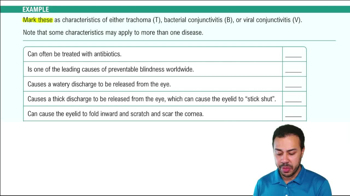
Trachoma is caused by specific ocular serotypes of Chlamydia trachomatis.
Is trachoma caused by the same serotypes of Chlamydia trachomatis that cause genital infections?
No, trachoma is caused by different serotypes than those responsible for genital chlamydia infections.
How does Chlamydia trachomatis cause damage in trachoma?
It infects and multiplies inside conjunctival cells, causing inflammation, pus discharge, and scarring.
What is trichiasis and how is it related to trachoma?
Trichiasis is a condition where eyelashes turn inward, often due to conjunctival scarring from repeated trachoma infections, leading to corneal damage.
How is trachoma primarily transmitted?
Trachoma spreads via fomites, physical contact, and contaminated flies, especially in crowded, unsanitary conditions.
What are fomites and how do they relate to trachoma transmission?
Fomites are inanimate objects or surfaces that can carry infectious agents, such as towels, which can spread trachoma.
What are the main symptoms of trachoma?
Symptoms include chronic inflammation, pus-filled eye discharge, and conjunctival scarring.
Why is trachoma considered a disease of poverty?
Because it is associated with crowded living conditions, poor sanitation, and limited access to medical care.
How is trachoma diagnosed in areas without laboratory facilities?
It is often diagnosed through visual inspection of the eye.
What laboratory test can confirm trachoma?
A conjunctival swab can be used to detect Chlamydia trachomatis cells.
What is the main antibiotic used to treat trachoma?
Azithromycin is commonly used, usually administered orally.
Why are oral antibiotics preferred over eye drops for trachoma treatment?
Oral antibiotics treat the whole body, including areas like the nasopharynx where the bacteria may persist.
When might surgery be necessary in trachoma cases?
Surgery may be needed in advanced cases to correct eyelid deformities and prevent further eye damage.
Is complete immunity to trachoma possible after infection?
No, full immunity is not possible, though repeated infections and treatments may provide some protection.
Why is prevention and timely treatment important in trachoma?
Because immunity is incomplete, prevention and early antibiotic therapy are crucial to reduce the risk of blindness.
 Back
Back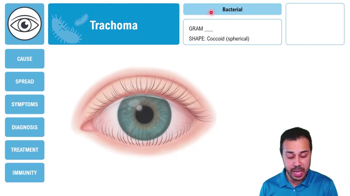
 04:32
04:32