Back

Types of Solid Culture Media definitions

Control buttons has been changed to "navigation" mode.
1/15
  • Agar

    A polysaccharide from marine algae used to solidify liquid media, providing a stable surface for microbial growth.
  • Polysaccharide

    A complex carbohydrate composed of many sugar units, serving as the main component in the solidifying agent for media.
  • Marine Algae

    Aquatic organisms that are the natural source of the solidifying agent used in solid culture media.
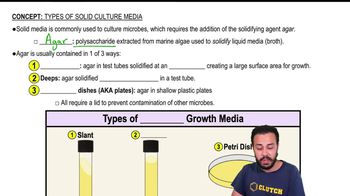
  • Slant

    A test tube with solidified media at an angle, increasing surface area to support microbial growth.
  • Deep

    A test tube with upright solidified media, forming a thick layer for culturing microbes.
  • Petri Dish

    A shallow, covered plastic plate filled with solidified media, ideal for growing and isolating microbes.
  • Plate

    A general term for a shallow vessel containing solid media, commonly used for culturing microorganisms.
  • Surface Area

    The extent of exposed solid media available for microbial growth, maximized in certain media types.
  • Contamination

    The unintended introduction of unwanted microbes, prevented by using covers on culture vessels.
  • Streak Plate Method

    A technique for spreading microbes on solid media to isolate individual colonies.
  • Colony

    A visible cluster of microbes originating from a single cell, often isolated on solid media.
  • Solid Culture Media

    A nutrient-rich, firm substrate used to support and observe microbial growth in laboratory settings.
  • Broth

    A liquid nutrient medium that can be solidified with a specific agent to create a firm surface for culturing.
  • Test Tube

    A cylindrical vessel used to contain solidified media in slant or deep forms for microbial cultivation.
  • Lid

    A protective cover placed on culture vessels to prevent entry of unwanted microorganisms.