 Back
BackFundamentals of Microbiology
 04:26
04:26
Terms in this set (16)
Metabolism, growth, reproduction, and response to stimuli are the four processes of life.
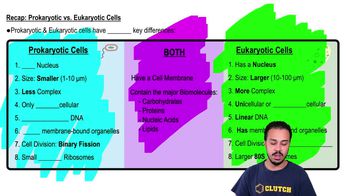
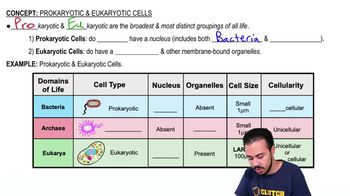
Prokaryotic cells lack a nucleus and membrane-bound organelles; eukaryotic cells have a nucleus and organelles.
Capsules are well-organized, firmly attached layers; slime layers are loosely attached and diffuse.
Fimbriae are short, numerous for attachment; pili are longer for DNA transfer; flagella are long for motility.
Shapes include cocci (spherical), bacilli (rod-shaped), and spirilla (spiral). Arrangements vary like chains or clusters.
Gram-positive walls have thick peptidoglycan; Gram-negative have thin peptidoglycan and an outer membrane.
Gram-positive cells stain purple; Gram-negative cells stain pink/red due to differences in cell wall structure.
The cytoplasmic membrane is a phospholipid bilayer controlling substance movement and energy generation.
Passive transport moves substances down concentration gradients; active transport uses energy to move substances against gradients.
Endospores are dormant, resistant structures formed for survival under harsh conditions.
Organelles include nucleus (DNA storage), mitochondria (energy), chloroplasts (photosynthesis), and ER (protein/lipid synthesis).
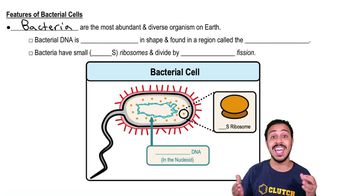
Archaeal cells have unique membrane lipids and lack peptidoglycan, unlike bacterial cells.
The theory states mitochondria and chloroplasts originated from prokaryotes engulfed by ancestral eukaryotes.
Methods to prevent contamination when transferring microorganisms, such as flame sterilization and sterile tools.
Place a drop of liquid specimen on a slide, cover with a coverslip, and observe under a microscope.
Microorganisms are found everywhere in the environment, including extreme habitats.