 Back
Microbial Genetics Basics
 02:04

Terms in this set (20)
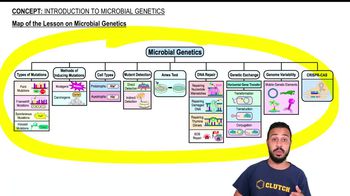
Microbial genetics is the study of how genes are organized and regulated in microbes, including bacteria, viruses, fungi, and protozoa.
Bacteria, viruses, fungi, and protozoa are the primary microbes studied in microbial genetics.
It helps understand microbial functions, gene transfer, mutation, and antibiotic resistance mechanisms.
Chromosomal DNA is the main genetic material in bacteria, usually a single circular chromosome.
A plasmid is a small, circular, double-stranded DNA molecule separate from chromosomal DNA that can replicate independently.
Plasmids often carry genes for antibiotic resistance and can be transferred between bacteria.
A mutation is a change in the nucleotide sequence of microbial DNA that can affect gene function.
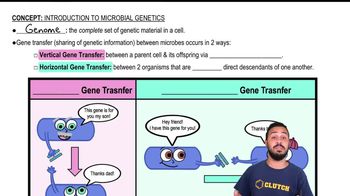
Horizontal gene transfer is the movement of genetic material between microbes other than by descent.
Transformation, transduction, and conjugation are the three main mechanisms.
Transformation is the uptake of free DNA from the environment by a bacterial cell.
Transduction is the transfer of bacterial DNA by a bacteriophage (virus).
Conjugation is the direct transfer of DNA between two bacterial cells via a pilus.
A bacteriophage is a virus that infects bacteria and can mediate gene transfer.
Mutations introduce genetic diversity, which can lead to adaptation or antibiotic resistance.
DNA is transcribed into RNA, which is translated into proteins.
RNA acts as a messenger carrying genetic information from DNA to ribosomes for protein synthesis.
An operon is a cluster of genes under control of a single promoter, allowing coordinated gene expression.
The lac operon in E. coli controls lactose metabolism genes.
Gene regulation controls when and how much a gene is expressed to adapt to environmental changes.
It helps understand pathogen virulence, antibiotic resistance, and guides development of treatments.