 Back
Microbial Genetics - Microbiology
 02:04

Terms in this set (20)
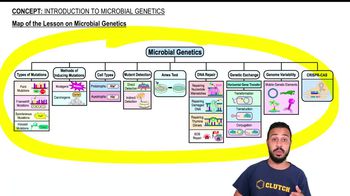
Microbial genetics is the study of how microbes inherit traits and how their genetic material is organized, replicated, and expressed.
The main types are DNA and sometimes RNA, which carry the genetic information in microbes.
Genotype is the genetic makeup of a microbe; phenotype is the observable traits resulting from the genotype.
A gene is a segment of DNA that codes for a functional product, usually a protein.
Bacterial DNA is typically a single, circular chromosome located in the nucleoid region.
A plasmid is a small, circular DNA molecule separate from the chromosome that can replicate independently.
Plasmids often carry genes for antibiotic resistance or other survival advantages.
DNA replication is semiconservative, producing two DNA molecules each with one original and one new strand.
Key enzymes include DNA helicase, DNA polymerase, and ligase.
Transcription is the process of copying DNA into messenger RNA (mRNA).
Translation is the synthesis of proteins from mRNA by ribosomes.
The flow of genetic information: DNA → RNA → Protein.
A mutation is a change in the nucleotide sequence of DNA.
Types include point mutations, insertions, deletions, and frameshift mutations.
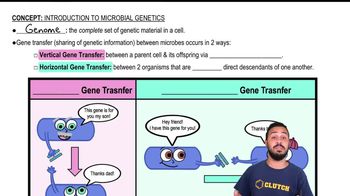
Horizontal gene transfer is the movement of genetic material between microbes, not by inheritance.
Transformation, transduction, and conjugation.
Transformation is uptake of free DNA from the environment by a microbe.
Transduction is gene transfer mediated by bacteriophages (viruses that infect bacteria).
Conjugation is direct transfer of DNA between two bacterial cells via a pilus.
It helps understand microbial functions, antibiotic resistance, and biotechnology applications.