 Back
BackMicrobial Mechanisms of Pathogenicity - Microbiology
 02:35
02:35
Terms in this set (21)
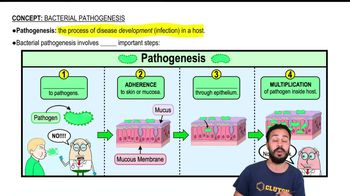
Pathogenesis is the process of disease development (infection) in a host.
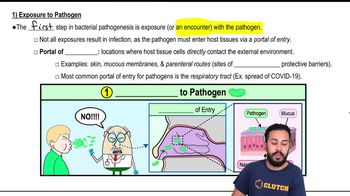
Exposure to the pathogen through a portal of entry is the first step in bacterial pathogenesis.
Portals of entry include skin, mucous membranes, and parenteral routes (sites bypassing protective barriers). The respiratory tract is the most common portal.
Masks cover the openings to the respiratory system, which are the portal of entry and exit for respiratory viruses like SARS-CoV-2.
Adhesion is the ability of a pathogen to attach to host cells using adhesion factors called adhesins, which bind specific receptors on host cells.
Adhesins are found on bacterial pili, fimbriae, and flagella.
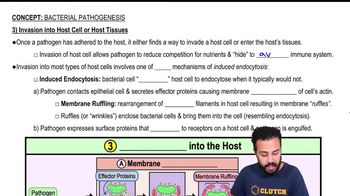
Invasion is when a pathogen enters host cells or tissues, often by inducing endocytosis or membrane ruffling to enter cells and evade the immune system.
Membrane ruffling is the rearrangement of actin filaments in the host cell membrane, creating ruffles that engulf bacteria during invasion.
Pathogens cause local (confined), focal (spread to a specific location), and systemic (widely spread) infections.
Exotoxins are soluble proteins secreted by pathogens that damage host cells and tissues.
Endotoxin is the lipopolysaccharide (LPS) component of the outer membrane of gram-negative bacteria, especially the toxic Lipid A portion.
Exotoxins include A-B toxins, membrane-damaging toxins, and superantigens.
A-B toxins have two parts: the A (active) subunit causes damage, and the B (binding) subunit binds specific host cells.
Membrane-damaging toxins disrupt host cell membranes causing lysis, including pore-forming toxins and phospholipases.
Superantigens are exotoxins that overstimulate T helper cells, causing massive cytokine release called a cytokine storm, which can be life-threatening.
Septic shock is a systemic inflammatory response caused by Lipid A from endotoxin entering the bloodstream, leading to fever, inflammation, and organ failure.
Exotoxins are highly toxic and lethal in small doses, while endotoxins are less toxic and require large amounts to cause disease.
Excessive immune responses like inflammation, cytokine storms, and antibody-antigen complexes can cause unintended damage to host tissues.
Pathogens avoid phagocytosis by producing capsules, degrading complement proteins like C5a, producing toxins that kill phagocytes, and using Fc receptors to block antibody function.
Antigenic variation is when pathogens alter their surface antigens to evade recognition by host antibodies during adaptive immunity.
Viruses evade immunity by preventing antiviral protein effects, interfering with MHC I antigen presentation, and changing surface proteins to avoid antibodies.