Back

Microbiology: Bacterial Culturing and Sterilization

Control buttons has been changed to "navigation" mode.
1/26
  • Why are growth factors needed in bacterial culturing?

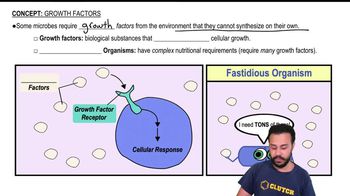
    Growth factors provide essential nutrients like energy, carbon, nitrogen, sulfur, phosphorous, trace metals, and vitamins required for bacterial growth.
  • What is the difference between autotrophs and heterotrophs in terms of energy source?

    Autotrophs obtain energy from light (photo) or inorganic chemicals (chemo), while heterotrophs obtain energy from organic compounds.
  • What are the main types of media used in bacterial culturing?

    Nutrient/basic/complex, enriched/fortified, selective, differential, assay/defined/synthetic media.
  • What is the purpose of selective media?

    Selective media inhibit the growth of certain microbes while allowing others to grow, aiding in isolation.
  • What is differential media used for?

    Differential media distinguish between different types of bacteria based on metabolic or color changes.
  • Define pure culture and mixed culture.

    Pure culture contains only one species of microorganism; mixed culture contains multiple species.
  • Name common plating methods used in bacterial culturing.

    Streaking, quadrant, radiant, spread, pour plate, and replica plating.
  • What is the advantage of streak plating?

    Streak plating isolates individual colonies by diluting bacteria across the agar surface.
  • What is the difference between qualitative and quantitative plating methods?

    Qualitative methods identify presence or type of bacteria; quantitative methods measure bacterial numbers.
  • List cultural characteristics used to identify bacteria.

    Size, color, elevation, margin/shape, composition/texture, consistency, and opacity.
  • Define sterilization in microbiology.

    Sterilization is the process of killing or removing all forms of microbial life, including spores.
  • What is the difference between disinfectant and antiseptic?

    Disinfectants are used on inanimate objects; antiseptics are safe for use on living tissues.
  • Define thermal death point (TDP).

    TDP is the lowest temperature that kills all microbes in a sample in 10 minutes.
  • Define thermal death time (TDT).

    TDT is the minimum time required to kill all microbes at a specific temperature.
  • What is decimal reduction time (D-value)?

    D-value is the time needed at a certain temperature to reduce the microbial population by 90% (one log).
  • How does moist heat sterilization work?

    Moist heat uses steam to denature proteins and destroy microbes more effectively than dry heat.
  • What is the difference between kinetic and potential energy in sterilization?

    Kinetic energy relates to heat movement (e.g., steam), while potential energy relates to stored energy (e.g., chemical agents).
  • What is pasteurization?

    Pasteurization is a mild heat treatment that reduces microbial load without sterilizing.
  • Name methods of dry heat sterilization.

    Flaming, flambéing, and dry heat in an oven or chamber.
  • What are low temperature methods for microbial control?

    Desiccation (drying) and lyophilization (freeze-drying) to inhibit microbial growth.
  • How does gas sterilization work?

    Gas sterilization uses chemical gases like ethylene oxide to kill microbes by alkylating proteins and DNA.
  • What types of electromagnetic radiation are used for sterilization?

    UV light, X-rays, gamma rays, and microwaves.
  • What is the relationship between wavelength and frequency in radiation?

    Wavelength and frequency are inversely related; shorter wavelengths have higher frequencies and more energy.
  • How does membrane filtration sterilize liquids?

    Membrane filtration physically removes microbes by passing liquids through filters with pores small enough to trap bacteria.
  • List qualities of an ideal disinfectant.

    Effective, fast-acting, stable, non-toxic, odorless, inexpensive, soluble, broad-spectrum, non-corrosive, and easy to use.
  • How do disinfectants kill microbes?

    By oxidation, protein denaturation, disrupting membrane permeability, salting out proteins, or acting as poisons.