 Back
Microbiology Chapter 7: Sterilization and Disinfection Concepts
 07:36

Terms in this set (22)
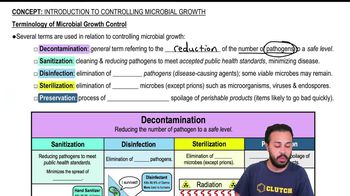
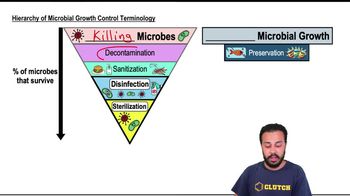
Sterilization is the process of destroying all forms of microbial life, including spores.
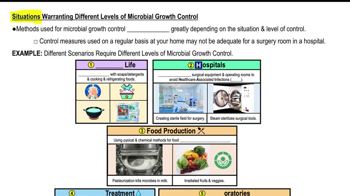
Commercial sterilization is the process of killing Clostridium botulinum endospores in canned food to prevent botulism.
Disinfection is the process of eliminating most or all pathogenic microorganisms on inanimate objects, but not necessarily all spores.
An antiseptic is a chemical agent used on living tissue to reduce the number of microbes.
Degerming is the mechanical removal of microbes from a limited area, such as skin around an injection site.
Bacteriostatic agents inhibit bacterial growth without killing the bacteria.
Bactericidal agents kill bacteria directly.
Sanitization is the process of lowering microbial counts on eating utensils or surfaces to safe public health levels.
TDP is the lowest temperature at which all microbes in a liquid culture are killed in 10 minutes.
TDT is the minimum time required to kill all microbes at a specific temperature.
DRT is the time required to kill 90% of the microbes at a given temperature.
Pasteurization is a mild heat treatment that reduces spoilage organisms and pathogens without sterilizing.
Moist heat kills microbes by denaturing proteins and includes methods like boiling and autoclaving.
Dry heat kills microbes by oxidation and includes methods like flaming and hot air ovens.
Ionizing radiation (e.g., X-rays, gamma rays) kills microbes by damaging DNA and generating reactive molecules.
Non-ionizing radiation (e.g., UV light) kills microbes by causing thymine dimers in DNA, disrupting replication.
Alcohols kill microbes by denaturing proteins and dissolving lipids; commonly used are ethanol and isopropanol.
Ethylene oxide is a gaseous sterilant that alkylates proteins and DNA, used for heat-sensitive materials.
Halogens like iodine and chlorine kill microbes by oxidizing cellular components.
Aldehydes (e.g., formaldehyde) kill microbes by cross-linking proteins and nucleic acids.
Peroxygens such as hydrogen peroxide kill microbes by producing reactive oxygen species that damage cells.
Biguanides disrupt microbial cell membranes and are used as antiseptics (e.g., chlorhexidine).