Back

Microbiology Exam 2 Study Guide Flashcards

Control buttons has been changed to "navigation" mode.
1/28
  • Difference between catabolism and anabolism

    Catabolism breaks down molecules to release energy; anabolism uses energy to build complex molecules.
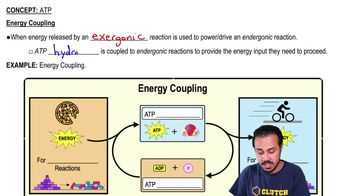
  • How does ATP store and transfer energy?

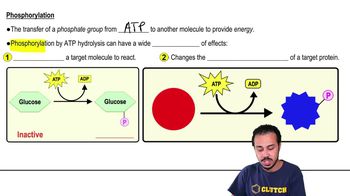
    ATP stores energy in its high-energy phosphate bonds and transfers energy by hydrolyzing to ADP + Pi.
  • Compare aerobic respiration, anaerobic respiration, and fermentation

    Aerobic respiration uses oxygen as final electron acceptor; anaerobic respiration uses other acceptors; fermentation uses organic molecules without electron transport chain.
  • Role of enzymes in metabolism

    Enzymes catalyze metabolic reactions and are regulated by inhibitors like competitive, noncompetitive, and feedback inhibition.
  • Classification of microorganisms by energy and carbon source

    Phototrophs use light; chemotrophs use chemicals; autotrophs use CO2; heterotrophs use organic carbon.
  • Function of electron carriers NADH and FADH₂

    NADH and FADH₂ carry electrons to the electron transport chain to generate ATP via oxidative phosphorylation.
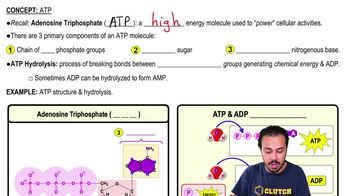
  • ATP structure and function

    ATP consists of adenine, ribose, and three phosphates; energy is released when ATP converts to ADP + Pi.
  • Purpose, inputs, and outputs of glycolysis

    Glycolysis breaks down glucose into 2 pyruvate, producing 2 ATP and 2 NADH molecules.
  • Products and significance of the Krebs cycle

    Krebs cycle produces NADH, FADH₂, and ATP, providing electrons for the electron transport chain.
  • Electron Transport Chain and proton motive force

    ETC transfers electrons to create a proton gradient that drives ATP synthesis via the proton motive force.
  • Substrate-level vs oxidative phosphorylation

    Substrate-level phosphorylation directly forms ATP during metabolism; oxidative phosphorylation uses ETC and proton gradient.
  • Difference between lactic acid and alcohol fermentation

    Lactic acid fermentation produces lactic acid; alcohol fermentation produces ethanol and CO2.
  • Phases of the bacterial growth curve

    Lag (adaptation), log (exponential growth), stationary (growth = death), death (decline).
  • Describe binary fission and generation time

    Binary fission is bacterial cell division; generation time is the time for one cell to divide.
  • Oxygen requirement classifications

    Obligate aerobe, obligate anaerobe, facultative anaerobe, microaerophile, aerotolerant anaerobe.
  • Environmental factors affecting microbial growth

    Temperature, pH, osmotic pressure, and oxygen availability influence growth.
  • Steps of biofilm formation

    Attachment, colonization, maturation, and dispersion.
  • Structure of DNA and complementary base pairing

    DNA is double-stranded with antiparallel strands; bases pair A–T and G–C via hydrogen bonds.
  • Central Dogma of molecular biology

    DNA is transcribed to RNA, which is translated into protein.
  • Types of mutations and their effects

    Silent (no change), missense (amino acid change), nonsense (stop codon), frameshift (reading frame shift).
  • Mechanisms of horizontal gene transfer

    Transformation (uptake of DNA), transduction (phage-mediated), conjugation (plasmid transfer via sex pilus).
  • Define sterilization, disinfection, antisepsis, and sanitization

    Sterilization kills all microbes; disinfection reduces pathogens; antisepsis is disinfection on living tissue; sanitization lowers microbial counts.
  • D-value in microbial control

    D-value is the time to reduce microbial population by 90% under specific conditions.
  • Proper autoclave conditions

    121°C, 15 psi pressure, for 15 minutes to achieve sterilization.
  • Physical methods of microbial control

    Heat, cold, pressure, desiccation, radiation, sonication, and filtration.
  • Chemical methods of microbial control

    Alcohols, halogens, hydrogen peroxide, and soaps disrupt or kill microbes.
  • Pasteurization methods

    HTST (high temperature short time) and UHT (ultra-high temperature) reduce pathogens in liquids.
  • UV radiation effect on microbes

    UV causes thymine dimers in DNA, leading to mutations and cell death.