 Back
BackMicrobiology: Infection, Immunity & Vaccines
 04:16
04:16
Terms in this set (30)
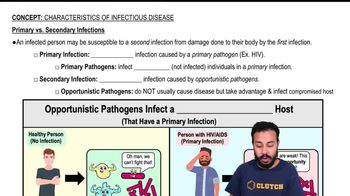
Microorganisms that can cause disease in healthy individuals.
Normally harmless microbes that cause disease when the host's immunity is weakened or when they enter unusual body sites.
Microorganisms that normally inhabit the body without causing disease but can sometimes cause endogenous infections.
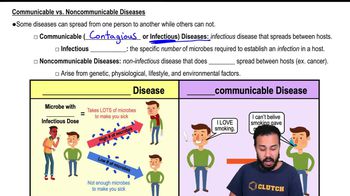
The minimum number of microbes required to establish an infection.
Diseases that can be transmitted from one host to another.
Highly communicable diseases that spread easily, such as measles.
Diseases that cannot be transmitted between individuals, e.g., tetanus.
Infections acquired in healthcare settings, often due to weakened immunity or exposure to pathogens.
Microbial components that enhance the ability to cause disease, such as fimbriae, capsules, coagulase, and leukocidins.
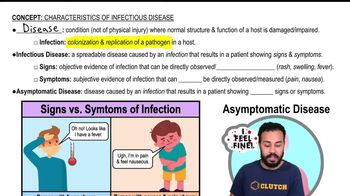
Symptoms are subjective experiences felt by the patient; Signs are objective observations measurable by others.
The natural habitat where a pathogen normally lives, such as humans, animals, or soil.
Person-to-person contact spreading disease.
Spread of disease via contaminated objects (fomites), food, water, or air.
A living organism, often an insect, that transmits disease (e.g., mosquitoes for malaria).
A symbiotic relationship where both organisms benefit.
Produced by Gram-negative bacteria; consist of lipopolysaccharide (LPS) released when cells die; cause fever and inflammation.
Physical and chemical barriers like skin, mucous membranes, lysozyme, and stomach acid that prevent pathogen entry.
Rubor (redness), Calor (heat), Tumor (swelling), Dolor (pain).
Chemotaxis, engulfment, phagolysosome formation, and destruction of the pathogen.
Neutrophils (first responders), macrophages (engulf pathogens and present antigens), and leukocytes (white blood cells).
Enhances inflammation, attracts phagocytes, and destroys pathogens.
Non-specific defenses are always present; induced defenses activate after infection (e.g., inflammation, fever).
B Cells produce antibodies (humoral immunity); T Cells attack infected or abnormal cells directly (cell-mediated immunity).
MHC I is on all nucleated cells and presents antigens to cytotoxic T cells; MHC II is on antigen-presenting cells and presents to helper T cells.
Antibodies block toxins or viruses to prevent infection.
Primary is the first exposure with slow response and IgM production; secondary is faster and stronger with IgG dominance due to memory cells.
First antibody produced during infection.
Most abundant antibody; provides long-term immunity and crosses the placenta.
Attenuated (live, weakened) vaccines provide strong immunity but are unsafe for immunocompromised; inactivated (killed) vaccines are safer but may require boosters.
Removal of self-reactive lymphocytes to prevent autoimmune disease.