 Back
Microbiology Metabolism and Enzyme Function
 02:17

Terms in this set (29)
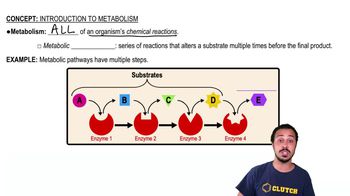
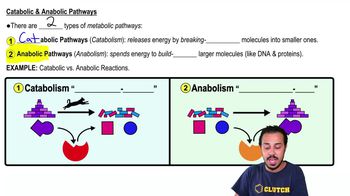
Metabolism refers to all chemical reactions in organisms that break down substances to release energy and reactions that use energy to build new substances.
1) Catabolic pathways: break down substances and release energy.
2) Anabolic pathways: use energy to build new molecules.
3) Amphibolic pathways: can function in both breakdown and synthesis.
ATP is made by catabolic reactions and provides energy for anabolic reactions; it is the key molecule cells use to do work.
Enzymes are protein catalysts that increase reaction rates by lowering activation energy without being consumed.
The active site is the region where the substrate binds and the enzyme catalyzes the reaction, often via induced fit.
By stabilizing the transition state, properly positioning reactants, and reducing the energy needed to start the reaction.
Temperature, pH, substrate concentration, enzyme concentration, cofactors, and inhibitors all affect enzyme activity.
Denaturation is the loss of an enzyme's 3D structure due to extreme temperature or pH, causing loss of function.
Competitive inhibitors bind the active site, blocking substrate binding.
Noncompetitive inhibitors bind elsewhere, reducing enzyme activity without blocking substrate binding.
Cofactors are nonprotein components (like metal ions) needed for enzyme function.
Coenzymes are organic cofactors that often act as electron carriers.
Redox reactions involve the transfer of electrons: oxidation is loss of electrons, reduction is gain of electrons; they always occur together.
NAD+ and FAD are coenzymes that act as electron carriers, accepting electrons during catabolic reactions.
1) Glycolysis
2) Krebs cycle (citric acid cycle)
3) Electron transport chain
2 pyruvate, 2 ATP (net), and 2 NADH molecules.
In the cytoplasm (cytosol) of both prokaryotic and eukaryotic cells.
Pyruvic acid undergoes decarboxylation to form acetyl-CoA, producing NADH and releasing CO2.
2 ATP (or GTP), 6 NADH, 2 FADH2, and 4 CO2 molecules.
ATP production using energy from electron transport chains and a proton gradient, primarily in aerobic respiration.
Direct enzymatic transfer of a phosphate group to ADP to form ATP, occurring in glycolysis and Krebs cycle.
By regenerating NAD+ from NADH through transferring electrons to organic molecules, allowing glycolysis to continue.
Homolactic fermentation (produces lactic acid only) and heterolactic fermentation (produces lactic acid, ethanol, and CO2).
Exoenzymes like lipases (lipids), proteases (proteins), and nucleases (nucleic acids) break down large molecules extracellularly.
Lipases break lipids into glycerol and fatty acids; glycerol enters glycolysis as DHAP, fatty acids undergo beta-oxidation to acetyl-CoA.
Proteases break proteins into amino acids, which can be recycled or deaminated for entry into the Krebs cycle.
When the end product of a pathway inhibits an earlier enzyme to slow or stop the pathway, conserving resources.
Obligate anaerobes are harmed by oxygen; facultative anaerobes can grow with or without oxygen, using fermentation or respiration.
In prokaryotes, it is in the plasma membrane; in eukaryotes, it is in the inner mitochondrial membrane.
The flow of protons down their gradient through ATP synthase, driving ATP production during oxidative phosphorylation.
Examples include catalase test (breakdown of H2O2), oxidase test (presence of cytochrome c oxidase), and methyl red test (mixed acid fermentation).