 Back
Microbiology: Molds and Fungal Structures
 01:27

Terms in this set (20)
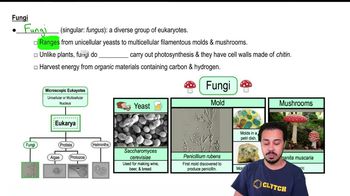
Molds are multicellular fungi composed of filamentous structures called hyphae that form a network called mycelium.
Hyphae are individual thread-like filaments of a mold, and mycelium is the mass or network of hyphae.
Vegetative mycelium grows on or in the substrate absorbing nutrients, while aerial mycelium grows above the substrate and is involved in reproduction.
The cell wall of molds is primarily composed of chitin, a polysaccharide.
Molds reproduce by forming spores, which can be asexual or sexual spores.
Conidia are asexual, non-motile spores produced by molds on specialized hyphae called conidiophores.
The asexual reproductive spores of molds are called conidia.
Common molds are classified based on their spore types and reproductive structures, such as conidia or sporangiospores.
Examples include Penicillium and Aspergillus.
Conidiophores are specialized hyphae that bear conidia; phialides are flask-shaped cells on conidiophores that produce conidia.
Aspergillus hyphae have conidiophores ending in a vesicle with phialides that produce chains of conidia.
Aspergillus can cause aspergillosis, a respiratory infection, especially in immunocompromised individuals.
Sporangiospores are asexual spores produced inside a sac called a sporangium; Rhizopus produces sporangiospores.
Rhizopus can cause mucormycosis, a serious fungal infection affecting sinuses, brain, and lungs.
Dermatophytes are fungi that infect skin, hair, and nails; ringworm is a common dermatophyte infection causing circular skin lesions.
Diagnosis is by microscopic examination of skin scrapings and culture on selective media.
Dermatophyte Test Medium (DTM) is used to culture fungi from infected tissue.
Macroconidia are large, multicellular asexual spores; microconidia are smaller, unicellular spores produced by dermatophytes.
DTM contains nutrients and a pH indicator; initial pH is acidic (~6.8), and it turns alkaline (red) after dermatophyte growth due to protein metabolism.
Dermatophytes use keratin in DTM as a nutrient source, causing pH changes.